Hamster bedding is sold on colour and fragrance, which are the two qualities that matter least. What matters is dust load, whether the material holds a tunnel, and whether it is safe to breathe and chew. Get the material right and a surprising number of common complaints quietly stop happening: sneezing, scratching, bar-pacing, collapsed nests.
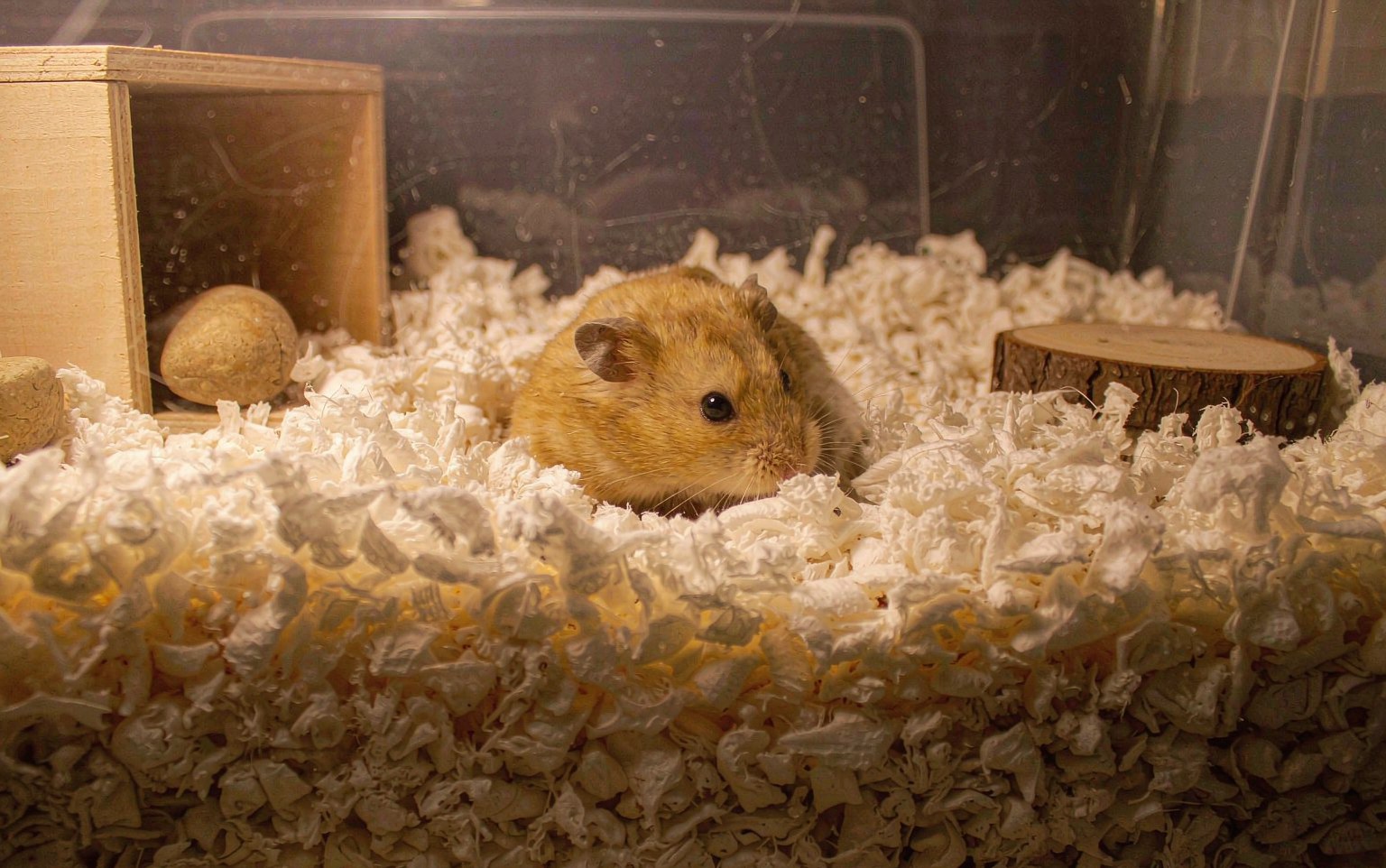
Why Material Matters as Much as Depth
A hamster’s airways are built for a dry burrow, not a dusty bag of shavings. Fine particles settle in the nose and lungs, and softwood shavings release aromatic oils that irritate the same tissue over months rather than days. Material also decides whether the cage works as a habitat at all: bedding that collapses cannot hold a tunnel, and a hamster with nowhere to dig tends to redirect that energy into bar-chewing and repetitive pacing.
The Safe Options, Compared
| Material | Strengths | Watch out for |
|---|---|---|
| Unscented paper | Lowest dust; holds tunnels; soft for nesting | Costlier; fluffy types mat down |
| Aspen shavings | Only reliably safe wood; good odour control; affordable | Weaker tunnels; can tangle in long-haired Syrians |
| Hemp | Excellent absorbency; low dust; sustainable | Coarse texture; mix with paper for tunnels |
| Shredded toilet paper | Ideal free nesting material | Nesting only, not a base layer |
Most experienced owners stop choosing between them and mix instead: a deep base of aspen or paper for structure, with paper or shredded toilet roll piled in one corner as a nest. That gives both a digging field and a soft bedroom, which is exactly what a burrowing rodent wants.
The Three Materials to Leave on the Shelf
- Pine and cedar shavings. Their aromatic phenols are the classic respiratory irritant. Kiln-drying reduces but does not remove them, so skip the whole category.
- Scented or dyed bedding. The fragrance is aimed at your nose. A hamster’s sense of smell is far sharper, and a permanent strong scent in a small cage is chronic stress.
- Fluffy cotton-wool and kapok nesting fibre. The strands do not break down; they wrap around limbs and, if pouched, can cause a fatal blockage.
Sawdust and corn cob deserve caution too. Sawdust is simply too dusty, while corn cob moulds quickly once damp and gives no tunnel structure at all.
Building a Base That Holds Tunnels
- Put hides and platforms on the cage floor first, so their weight never rests on loose bedding.
- Add a compressed base layer and press it down lightly; a loose fill collapses on the first dig.
- Fill deep at one end and leave a shallower area for the wheel and water bottle.
- Pile soft paper in one corner as the nesting zone, then let your hamster finish the work.
- Spot-clean daily rather than stripping the cage weekly, so the scent profile stays intact.
Match the material to your hamster rather than to the bag design. Buy small bags of two or three safe options before committing to a bulk pack, since hamsters have clear preferences about texture and nesting. If he sneezes, scratches or digs restlessly after a change, the new bedding is the first suspect: switch back and give it a week before looking for other causes.
General care information, not veterinary advice. Persistent sneezing, wheezing, watery eyes or hair loss should be assessed by a vet experienced with small pets.