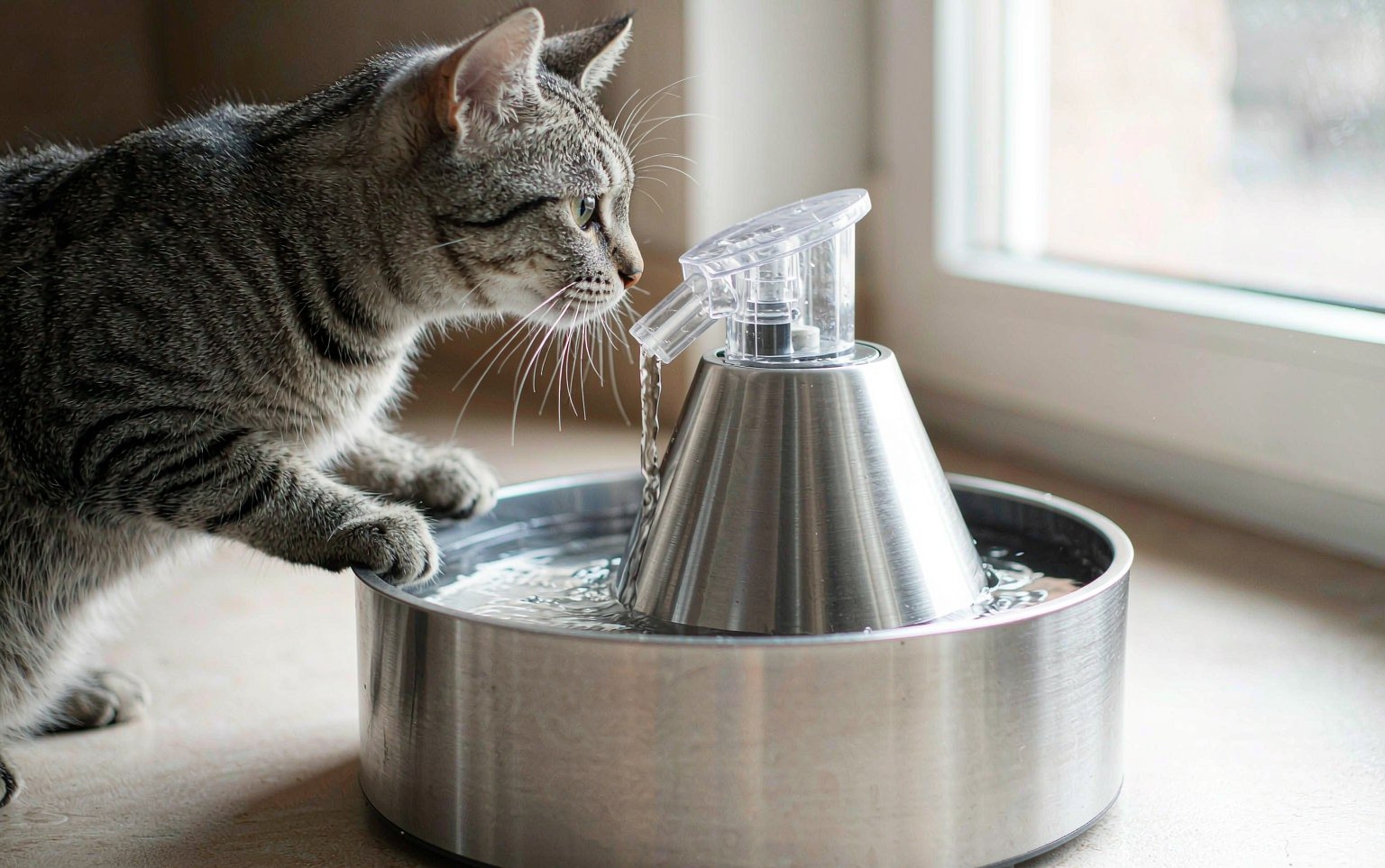
Running water convinces many reluctant cats and plenty of dogs to drink more, which is why pet fountains have become standard equipment in so many homes. But a fountain is a small appliance sitting in room-temperature water, coated all day in pet saliva, and it is not self-cleaning. Left alone, a fountain can end up serving water that is less fresh than a simple bowl washed every day.
Why fountains get slimy
That slippery film on the inside of a fountain or water bowl is biofilm: a community of bacteria that sticks to any wet surface and feeds on saliva, food crumbs, dust, and hair. Flowing water and a filter slow it down but never stop it. Add mineral scale from hard water, hair wrapped around the pump impeller, and an exhausted carbon filter, and a neglected fountain can taste and smell worse than the bowl it replaced. The good news is that the maintenance itself takes only a few minutes a week.
A routine that actually works
Most manufacturers converge on roughly the same schedule. Tighten it for multi-pet homes, shedding season, or warm rooms.
| When | Task |
|---|---|
| Daily | Top up to the fill line, check the flow, skim out visible hair or debris |
| Every 2 to 3 days | Dump all the water, rinse the basin, refill. Topping off alone never removes biofilm |
| Weekly | Unplug and fully disassemble. Wash every part in warm unscented dish soap, scrub corners with a small brush, rinse until no residue remains |
| Weekly | Open the pump housing and clear hair off the impeller; this is where slime concentrates and pumps fail |
| Monthly | Soak the pump in a 1:1 white vinegar and water solution for 30 to 60 minutes to dissolve scale, then rinse thoroughly |
| Every 2 to 4 weeks | Replace the carbon filter, sooner with multiple pets or hard water; rinse foam pre-filters under the tap |
Getting the soap and vinegar out
Rinse twice as long as feels necessary. Soap and vinegar residue changes the taste of water, and a picky cat may simply walk away rather than tell you. Air-dry the parts on a rack before reassembly, and never submerge the cord, plug, or electrical base unless the manual says it is safe.
Warning signs and smart habits
- Pink, orange, or black film anywhere in the basin: clean immediately, do not wait for the weekly cycle
- A pump that turns noisy, slow, or intermittent is usually fouled, not broken; clean it before buying a replacement
- If your pet suddenly refuses the fountain, offer a clean backup bowl right away and reset the fountain the same day
- Keep the fountain away from the food bowl and, for cats, well away from the litter box
- Place a washable mat underneath to catch splash and tracked crumbs
- Never mix cleaning chemicals; hot soapy water and dilute vinegar cover almost everything a fountain needs
A fountain rewards routine, not enthusiasm. Two minutes of scrubbing a week keeps the water genuinely fresher than any static bowl, and keeps the promise that made you buy the fountain in the first place. And if a weekend away breaks the routine, give the whole fountain a full wash when you are back rather than trusting the filter to catch up.