Dog owners treat bad breath as a personality trait. Veterinarians treat it as a symptom. Persistent odor is usually the first visible sign of periodontal disease, the most common health condition in dogs, affecting roughly 80 percent of them by two years of age. It is silent, progressive, and preventable, and it does far more damage than the tartar you can see suggests.
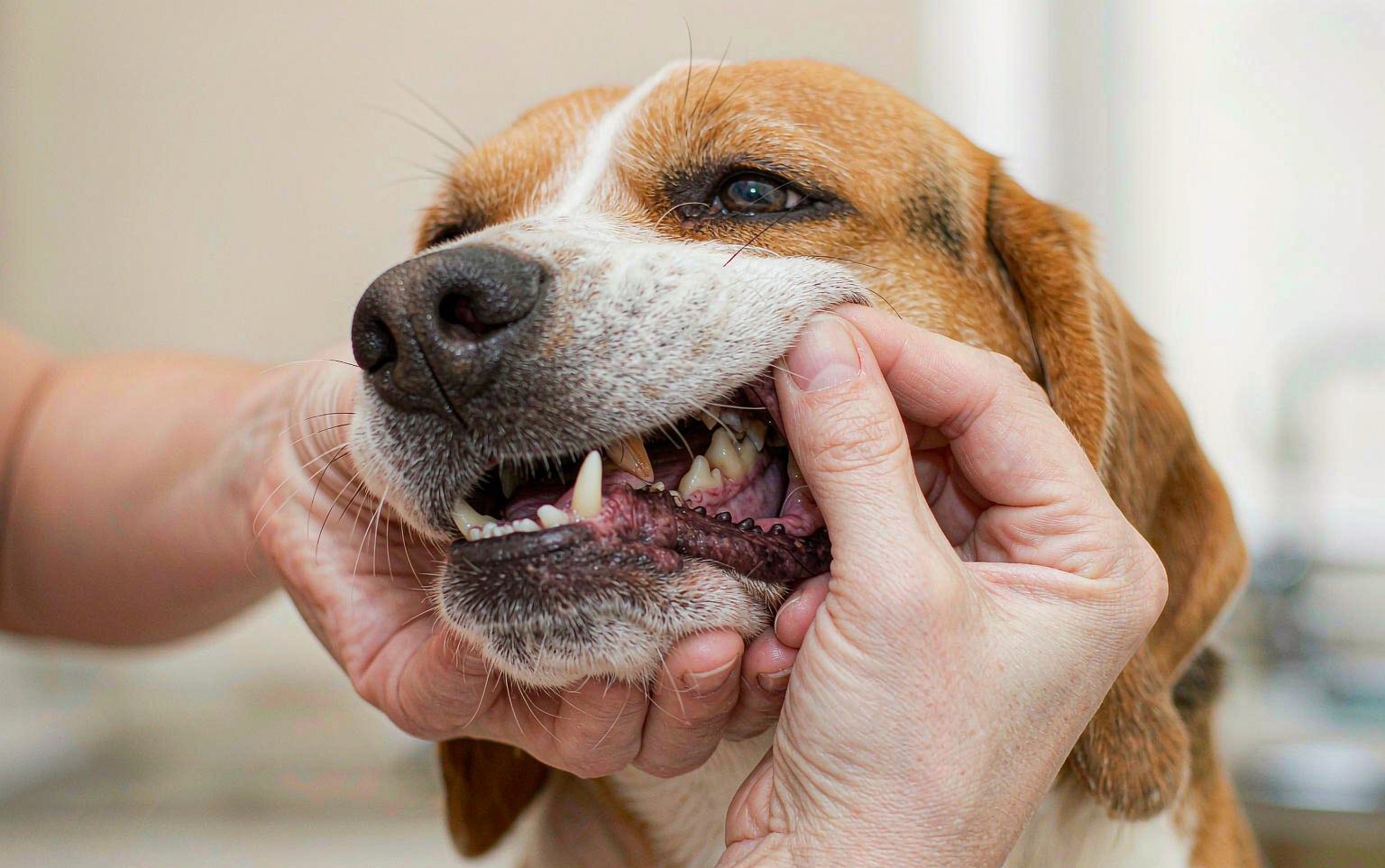
From plaque to bone loss
It starts with plaque, a soft bacterial film that reforms on teeth within 24 hours of cleaning. If it is not brushed away, it mineralizes into tartar, and the bacteria then spread below the gumline, where neither chewing nor brushing reaches. The dog’s own immune response to those bacteria destroys the gum attachment, then the bone and ligament that hold each tooth. Early gum inflammation is fully reversible; once attachment is lost, the damage is permanent, although treatment can stop it from getting worse. Small dogs under about 6.5 kilograms are up to five times more likely to develop serious periodontal disease than giant breeds, because their teeth are crowded into tiny jaws. Toy poodles, Cavalier King Charles spaniels, and flat-faced breeds top the risk list.
The four stages
| Stage | What is happening | Treatment direction | Reversible? |
|---|---|---|---|
| 1, gingivitis | Red or bleeding gums, no attachment loss yet | Professional cleaning and polishing, plus a home care routine | Yes |
| 2, early periodontitis | Pockets form under the gumline, under 25 percent attachment loss | Cleaning plus root planing to clean below the gum | No, but it can be stabilized |
| 3, moderate | 25 to 50 percent attachment loss, possible loose teeth | Deep treatment below the gum, sometimes gum surgery; teeth that cannot be saved are extracted | No |
| 4, advanced | Over 50 percent attachment loss, chronic pain, risk to other organs | Extraction of unsavable teeth, pain control, healing plan | No |
Why anesthesia is non-negotiable
Up to 60 percent of the disease is hidden below the gumline and cannot be assessed in a awake dog. A proper evaluation happens under anesthesia: probing every tooth for pockets, taking full-mouth dental X-rays, and cleaning underneath the gums where the real infection lives. Cosmetic cleanings done on awake dogs scrape the visible tartar, leave the disease untouched, and hand owners false reassurance, which is why veterinary bodies consider them harmful. Antibiotics alone also cannot fix it; they temporarily reduce bacteria but the hardened calculus stays as a permanent reservoir of infection. Untreated periodontal disease is linked to measurable changes in the heart, kidneys, and liver, and the chronic pain it causes is badly under-recognized. Dogs rarely stop eating; they simply eat more carefully, and owners read that as getting older.
Home care that actually works
- Daily tooth brushing with a soft brush and pet-specific toothpaste, never human toothpaste; even three or four sessions a week makes a real difference
- Dental chews, dental diets, and water additives carrying the VOHC seal as supplements to brushing, never replacements for it
- A professional cleaning about once a year for most dogs, more often for small breeds and fast tartar formers
- Watch for drooling, dropping food, pawing at the mouth, or a sudden preference for soft food
Vets commonly hear that a dog acts years younger a few weeks after treatment for advanced disease. That is what relieving chronic pain looks like from the outside. The breath improves too, but the smell was only ever the messenger.