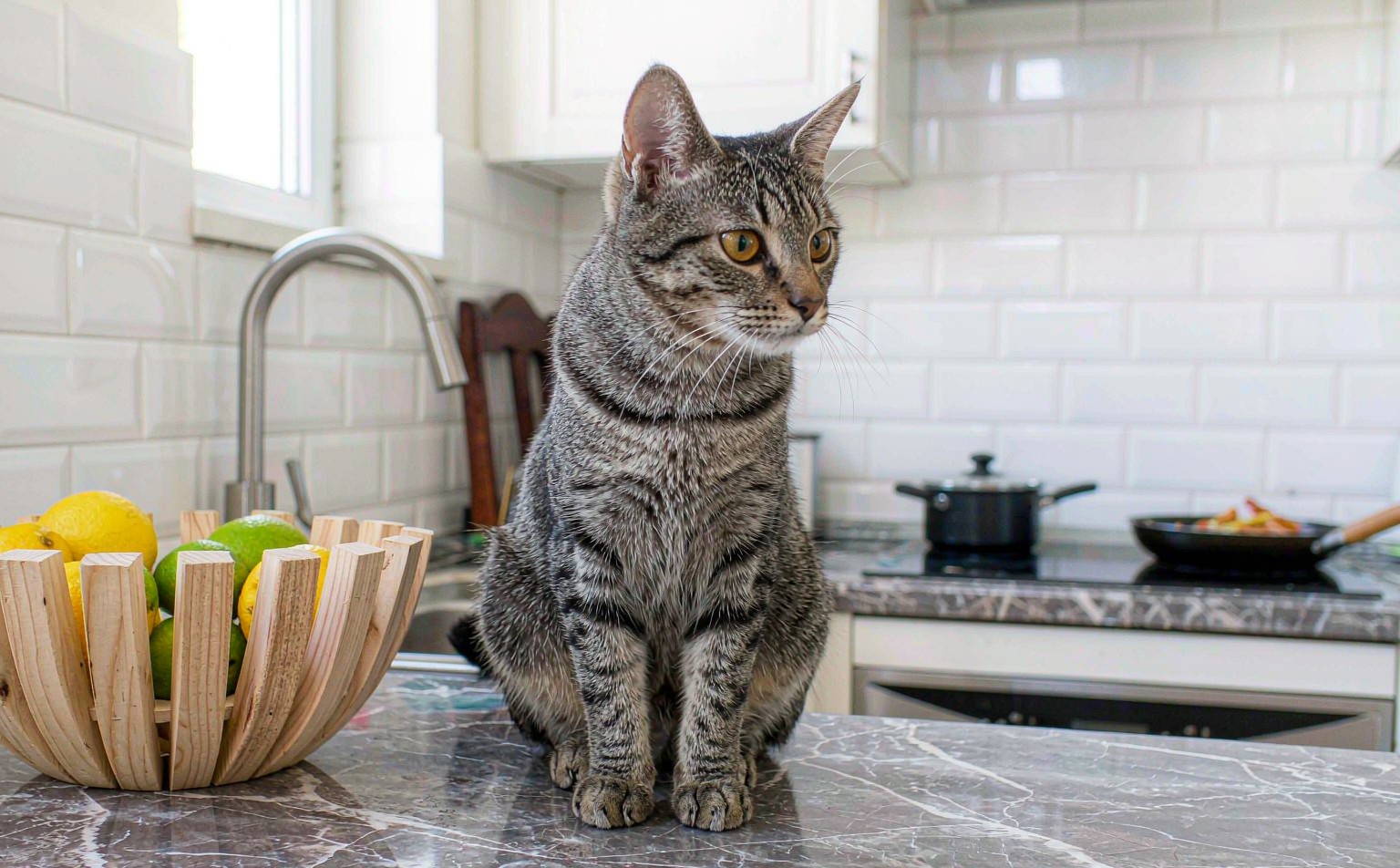
You scoop the cat off the counter, turn around to season the pan, and there she is again, sitting exactly where you just wiped. It feels like defiance. It is not. From a cat’s point of view, the kitchen counter is the best real estate in the house, and the habit only breaks when the alternative is genuinely better. The good news: this is one of the most fixable cat habits there is, and it does not require spraying water at anyone.
Why the Counter Wins
Jumping up is normal, healthy cat behavior. Height means safety, a full view of the room, and a warm microclimate near the stove or fridge. Counters also happen to sit right on top of the two most interesting machines in the house: the sink, with its dripping fascination, and the chopping board, with its smell of chicken. You will not talk a cat out of wanting a high perch. You can only decide where that perch is.
Step 1: Take the Paycheck Off the Counter
Before any training, make the counter boring. Every crumb your cat scores is a jackpot that undoes a week of work.
- Wipe surfaces after every meal and push appliances back so nothing hides behind them.
- Store food in closed containers; never leave butter, bread, or defrosting meat out.
- Rinse plates promptly and keep the sink drained so there is no drip to investigate.
- Move anything scented or edible, from the treat jar to the fruit bowl, out of reach or behind doors.
Step 2: Build a Better Spot Next Door
Cats do not respond to bans, but they respond enthusiastically to upgrades. Place a tall cat tree or a sturdy perch within a leap of the kitchen, ideally by the window that overlooks the room where you actually cook. Make it the best seat in the house: a treat from your treat pouch when all four paws land there, an occasional pinch of the good food served on top, and calm praise whenever your cat chooses it. You are not just giving an alternative; you are paying your cat for using it.
Step 3: Redirect, Do Not Punish
If you catch a cat mid-counter, resist the urge to shout, push, or squirt. Punishment teaches two lessons you do not want: that you are sometimes scary, and that the counter is only dangerous when you are in the room, which is why punished cats wait until you leave. Instead, call your cat over or tap gently on the perch, then reward generously the moment she hops onto it. The counter stays dull; the perch stays profitable.
A One-Week Setup Plan
| Days | Focus |
|---|---|
| 1 to 2 | Deep clean the counters, remove every food source, set up the perch or cat tree beside the kitchen |
| 3 to 4 | Pay the perch five or six times a day; counters stay completely boring |
| 5 to 7 | Practice a gentle invitation to the perch before cooking; reward every landing; keep surfaces spotless |
Expect a couple of weeks for a long-standing habit to fade, and know that one forgotten steak is enough to restart the whole project. Keep the counters uninteresting, keep the perch rewarding, and the kitchen will quietly stop being a cat hangout, no hard feelings on either side.