Food is the most popular training tool on earth, and it is easy to see why: it is fast, it works on almost every dog, and most cats will trade their dignity for a lick of tuna. But somewhere along the way, many owners notice an uncomfortable pattern. The sit happens only when the chicken appears. The recall happens only if the treat is visible. That is the moment to look at the difference between a lure, a reward, and a bribe, because they are not the same thing, and mixing them up is why some pets only listen when they see the payment.
Three Jobs Food Can Do
| Tool | When it appears | What it teaches | The catch |
|---|---|---|---|
| Lure | Before the behavior | Guides your pet into a new position, like a sit or a down | Becomes a crutch if it is never faded |
| Reward | After the behavior | Pays for a job already done and makes it repeat | Must arrive fast to connect the dots |
| Bribe | Before, to convince | Rewards refusing until payment is shown | Teaches your pet to hold out for visible cash |
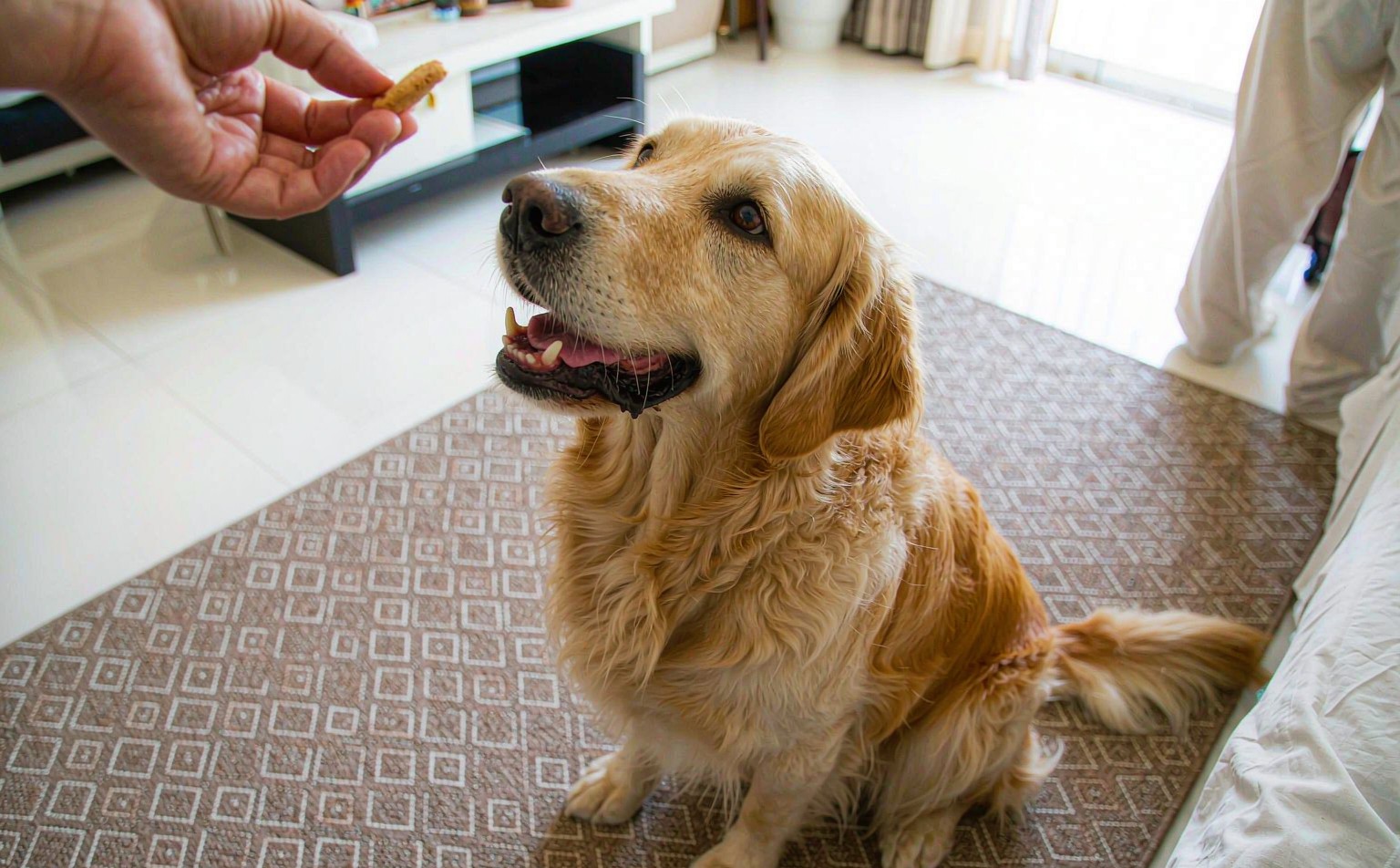
A lure is a teaching tool: a treat moved over the head draws a dog into a sit, or a lick of puree drawn along a counter guides a cat into a carrier. There is nothing wrong with using one. The problem is using it forever, because then the food becomes part of the cue itself.
Lure Once, Then Fade
Fading the lure is the bridge between teaching and real reliability. It takes about a week of casual practice.
- Use the treat to guide the movement for three to five repetitions.
- Make the same hand motion with an empty hand, keeping a treat hidden in your treat pouch or pocket.
- The moment the position happens, mark it with a cheerful “yes”, then pay from the pouch.
- Say the word, like “sit”, just before the empty-hand signal.
- Practice in a second room, then the yard, where the cue has to survive distractions.
Pay Fast, Pay Small
Rewards work because of timing, not size. Mark the instant your pet is correct, and deliver the food within a second or two. Keep pieces pea-sized so you can pay often without unbalancing dinner. Once a behavior is fluent, stop paying every single rep; pay randomly, mix in play, a sniff of a favorite bush, or the door opening, and let real life do part of the work. Cats learn the same way, just in shorter chapters: two or three minutes, high-value food, and a clear end while they are still winning.
If Your Pet Waits for the Treat
- Hide the food before you give the cue, never show it first.
- Ask for an easy, well-practiced behavior so the first empty-handed rep succeeds.
- If your pet stalls, go back a step in difficulty rather than producing the treat as a final argument.
- Never pay after a refusal; that is the bribe habit starting.
- Check the setup instead of blaming stubbornness: too many distractions usually means the environment, not the dog, is the problem.
Used well, food is a salary for good choices, not a hostage payment. Lure briefly, reward quickly, fade early, and your dog or cat will work for the cue itself, whether or not your pockets are loaded.