Raw feeding is one of the most polarizing topics in pet nutrition. Major veterinary organizations, including the AVMA and the FDA, advise against raw meat diets because of documented bacterial contamination and the lack of controlled studies showing benefits. At the same time, many owners still choose raw. If you are among them, the single most important distinction is between properly formulated commercial products and do-it-yourself recipes, and the most important skill is reading the label for nutritional completeness.
Why Commercial Beats Homemade for Nutrition
Published analyses repeatedly find that most home-prepared raw diets fail to meet AAFCO or National Research Council nutrient profiles. Common gaps include calcium, since plain muscle meat is phosphorus-heavy, along with zinc, vitamin D, and iodine. In growing animals, a wrong calcium-to-phosphorus ratio can cause permanent skeletal damage. Commercial raw makers, by contrast, can formulate against AAFCO profiles and add a vitamin and mineral premix to close those gaps. Commercial products still carry the pathogen risk that motivates the official warnings, so better formulation does not mean risk-free.
The AAFCO Statement Is Non-Negotiable
Every complete commercial raw product sold in the United States should carry a nutritional adequacy statement confirming it is complete and balanced for a named life stage. Treat the following wording as a red flag:
- “For intermittent or supplemental feeding only” — the food is a topper or treat, not a full diet.
- No AAFCO statement at all — there is no verification of completeness.
- “All life stages” on an adult-oriented product you plan to feed long term — acceptable in principle, but confirm calcium levels suit your animal, especially a puppy or kitten.
| What the label says | What it means |
|---|---|
| “Complete and balanced for adult maintenance” | Meets AAFCO adult nutrient profiles; suitable as the sole diet for healthy adults |
| “Complete and balanced for growth” or “all life stages” | Meets growth profiles; required if feeding puppies or kittens |
| “For intermittent or supplemental feeding” | Not complete; must not be the main diet |
What Else to Check on the Label
- A named protein first, such as chicken, beef, or lamb, rather than a generic “meat”.
- An organ source such as liver or heart, which supplies vitamins A, D, and B12.
- A stated calcium source, whether ground bone or a calcium supplement.
- A vitamin and mineral premix in the ingredient list, which is how completeness is actually achieved.
- Whether the product uses high-pressure processing (HPP), which reduces but does not eliminate pathogens, and whether the maker publishes batch test results.
Handling Rules That Do Not Bend
Even a nutritionally perfect raw product must be treated like raw meat in your kitchen, because FDA investigations and published surveys have repeatedly found Salmonella, Listeria, and E. coli in commercial raw foods. Keep it frozen until use, thaw it refrigerated, wash hands and surfaces for a full 20 seconds with soap, and do not rinse raw meat in the sink, which spreads droplets. Households with infants, elderly people, pregnant family members, or anyone immunocompromised should not feed raw at all, and the same caution applies to pets on chemotherapy. Check recall notices for the brands you buy.
The bottom line: if you feed raw, choose a commercial product with a life-stage-complete AAFCO statement, a premix, and careful handling discipline, and discuss the decision with your veterinarian, especially for young, old, or medically fragile animals.
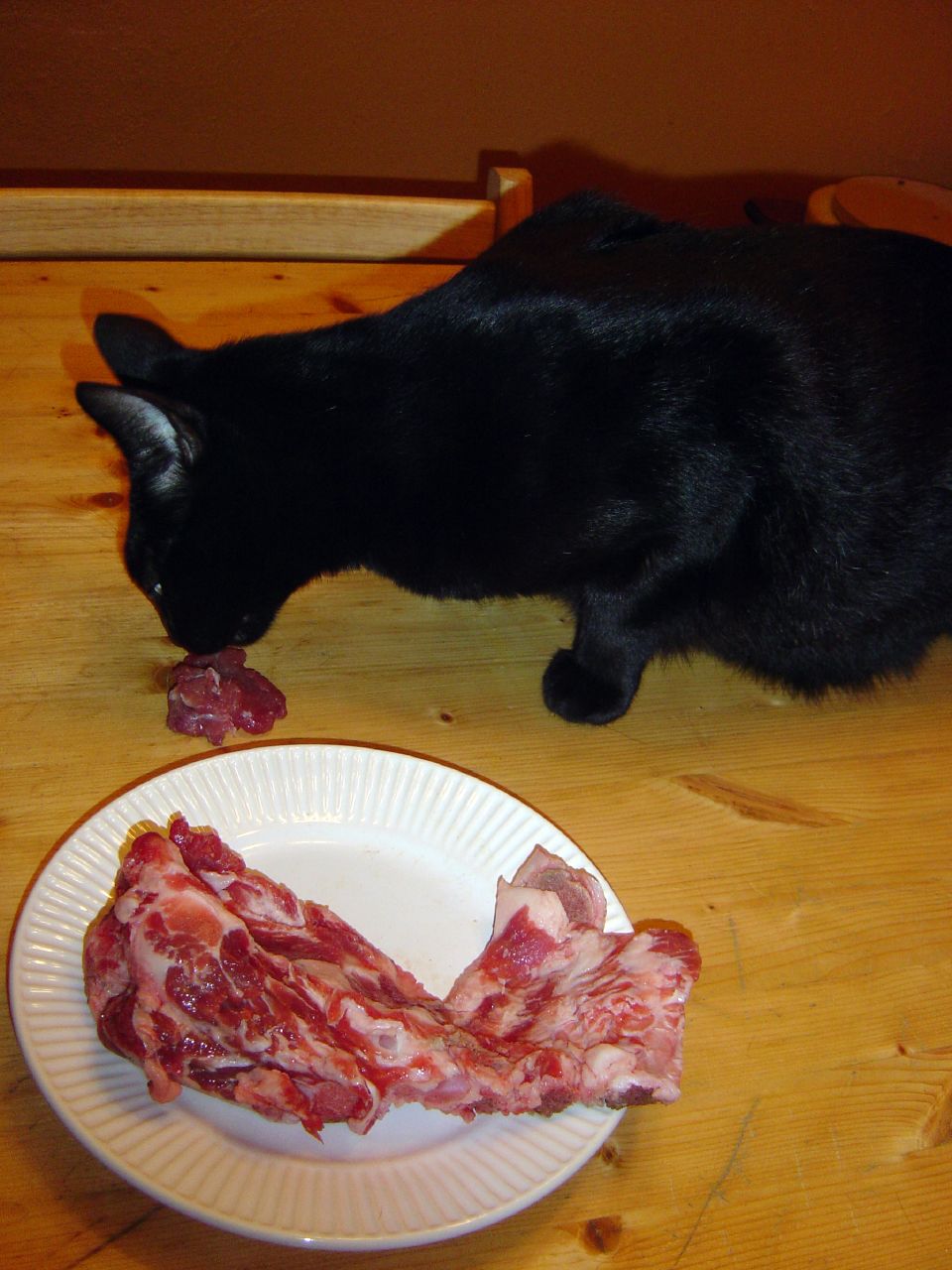
Photo: cara fealy choate / CC BY 2.0 / Wikimedia Commons