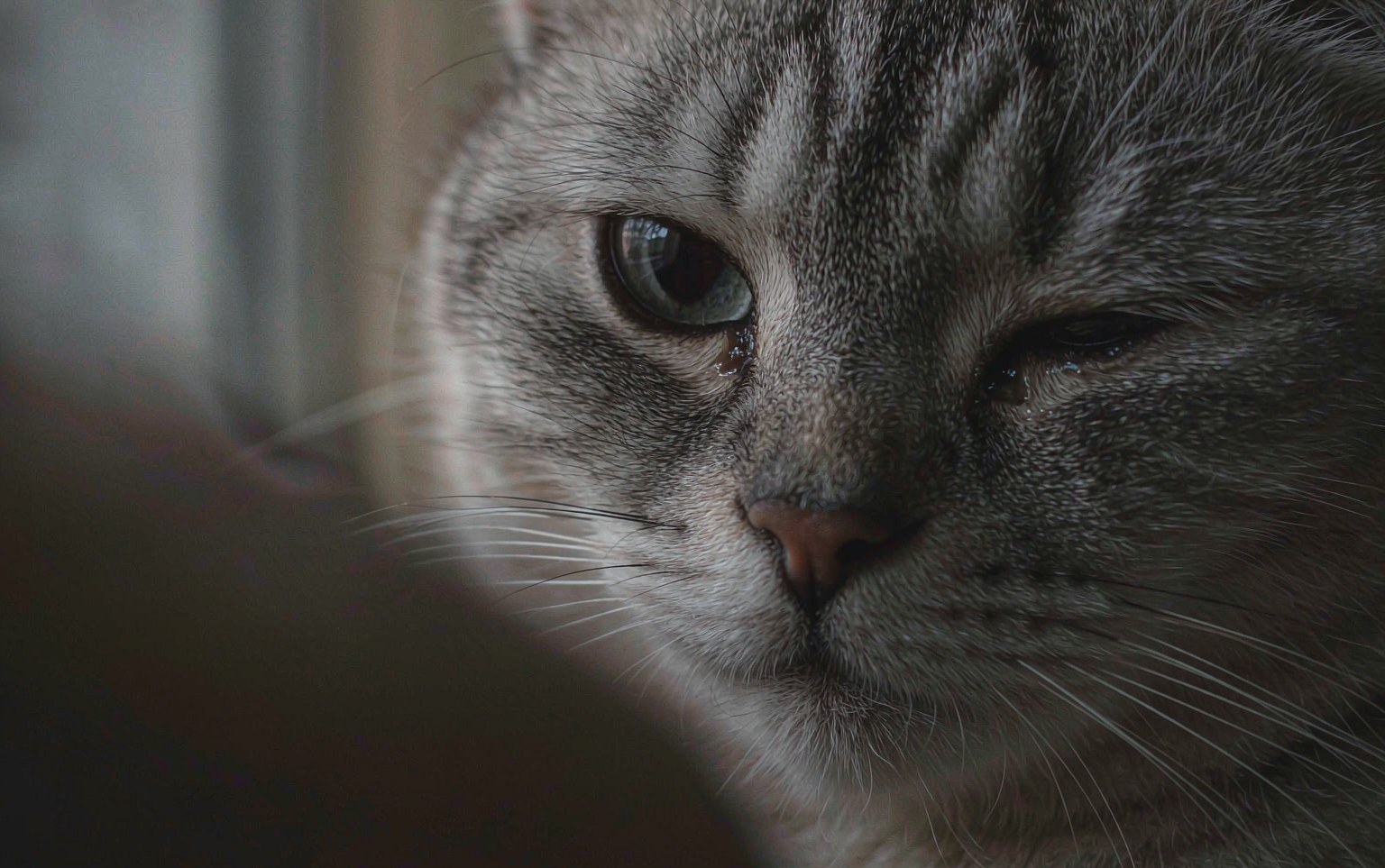
The cornea is the clear dome at the front of the eye, and it is packed with nerve endings, which is why any wound on it hurts so much. A corneal ulcer is an open wound on that surface, caused by scratches, infection, or disease underneath. It is one of the most common eye emergencies in both dogs and cats, and how fast it is treated largely decides whether the eye heals cleanly or scars, or in the worst cases, is lost.
How the surface gets damaged
Trauma leads the list: a scratch from another pet, a flick from a plant, a grass seed, or vigorous rubbing at an already irritated eye. Shampoo or cleaning chemicals can burn the surface. Dogs with dry eye stop producing enough tears to lubricate the cornea, and the surface then damages easily. In cats, feline herpesvirus is a classic cause of ulcers that keep coming back. Eyelid problems such as entropion, where the lid rolls inward and lashes drag across the eye, wear the surface down continuously. Flat-faced breeds with prominent eyes, including pugs, bulldogs, and Persians, simply have more cornea exposed to the world and injure it more often.
What you will see at home
Ulcers are usually in one eye, and the signs are the signs of pain:
- Squinting, or holding the eye completely shut
- Heavy tearing and wet discharge
- Redness and light sensitivity
- A cloudy, bluish, or hazy cornea, sometimes with a visible dent
- Pawing or rubbing at the face, or hiding; cats especially may go quiet and off food
- The third eyelid sliding up to cover part of the eye
The green dye test
You cannot see most ulcers with the naked eye. A veterinarian places a drop of fluorescein stain, an harmless orange dye, on the eye: wherever the surface is broken, the dye sticks and glows green under a blue light. A slit-lamp exam judges how deep the wound goes, and a Schirmer tear test checks whether dry eye contributed. Depth is the decision that shapes everything else.
Treatment depends on depth
| Ulcer type | Typical treatment direction | Healing time |
|---|---|---|
| Superficial, simple | Antibiotic eye drops to prevent infection, pain relief, and an e-collar to stop rubbing | About one to two weeks |
| Slow-healing (indolent) | Removing the dead surface tissue to restart healing, sometimes with tiny grid patterns cut to anchor healing | Weeks, with repeat procedures |
| Deep or infected | Intensive medicated drops, often around the clock, and surgery using a tissue flap or graft to reinforce the cornea | Weeks to a month |
| Perforated or melting | Emergency surgery to save the eye | Immediate |
One hard rule at home: never use human eye drops on a pet, and never use any drop containing a steroid unless a vet prescribed it for this exact eye. Steroids can turn a small superficial ulcer into a melting, sight-threatening one within days.
Go to the vet the same day if your pet keeps one eye shut for more than a few hours, if the cornea looks cloudy, if tearing is heavy, or if anyone is pawing at a face. Superficial ulcers treated early heal with a nearly perfect success rate; deep ones treated late can cost the eye. It is the rare pet problem where waiting even a day genuinely changes the outcome.