Walk down any pet aisle and elevated feeders are sold as the grown-up, ergonomic choice. For some pets they genuinely help. For others, particularly large deep-chested dogs, the research argues for caution. Bowl height is a medical decision, not a style decision, and this guide separates what the evidence says from what the packaging implies.
What raising the bowl is actually for
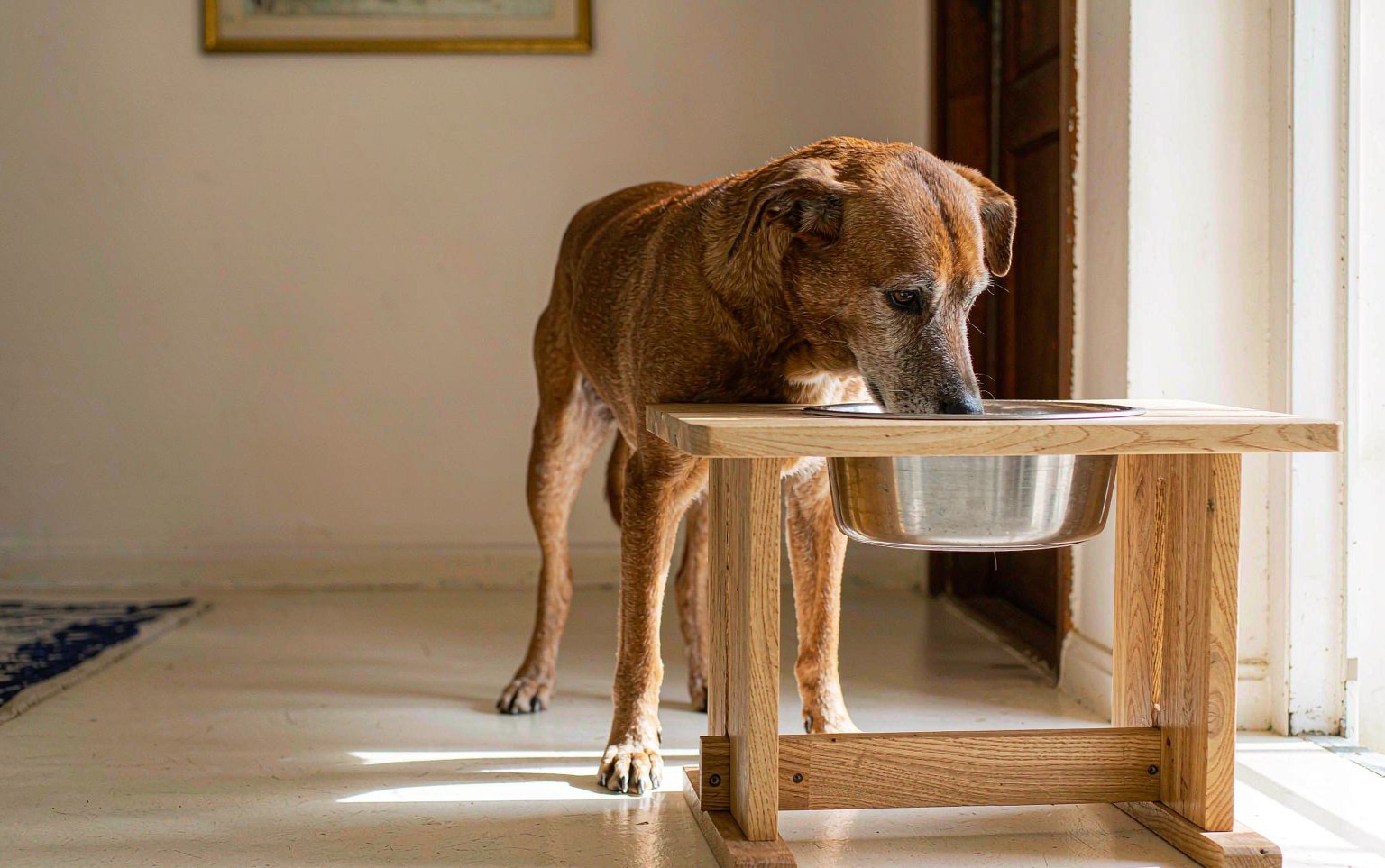
Height helps pets who have to bend painfully to reach the floor: senior dogs with neck or elbow arthritis, dogs with intervertebral disc disease, and animals recovering from orthopedic surgery. For them a modest raise turns mealtime from a stretch into a comfortable stand. The usual starting point is roughly 15 cm (about 6 inches) below the withers, the ridge at the top of the shoulder blades. Then watch your pet eat: a neck stretching upward means the stand is too tall, a sharp downward bend means too low. The goal is a level, neutral neck.
The bloat question
Bloat, or GDV, is the emergency in which a gas-filled stomach twists on itself; it can kill within hours without surgery. A widely cited Purdue University study of more than 1,600 large and giant breed dogs found that dogs fed from raised feeders had roughly double the risk of GDV compared with floor-level feeding, with the effect strongest in giant breeds. A later study found no independent link once breed, age, and eating speed were accounted for, so the evidence conflicts. What has not changed: no study shows that raising the bowl reduces bloat risk. For deep-chested breeds such as Great Danes, German Shepherds, Weimaraners, Standard Poodles, and setters, the default is a bowl on the floor, with any raise discussed with a veterinarian first. Fast eaters deserve the same caution, because gulping air seems easier, not harder, from a raised position. Water bowls carry no equivalent warning; the documented concern is specifically about large meals eaten quickly from a raised position.
Cats and tilted shallow bowls
For cats the useful feature is usually shape, not height. Shallow bowls keep whiskers from pressing into the sides, and a gentle tilt of about 10 to 15 degrees gathers food toward the low edge, which is comfortable for flat-faced breeds such as Persians. Raised cat stations appear harmless for most cats but come with no proven health benefit either; a shallow bowl on the floor achieves most of the same comfort. Tilted stands work well for kibble; for wet food, a shallow flat dish is usually simpler, because tilted wet food slides to one edge and out of easy reach.
A quick decision list
- Senior dog with arthritis or back problems: a raise may genuinely help; set the height with your vet’s guidance
- Deep-chested large or giant breed: keep the bowl on the floor unless your vet says otherwise
- Dog who eats too fast: a floor-level slow feeder beats any raised stand
- Healthy small or medium dog: no benefit shown; the floor is fine
- Flat-faced cat: shallow, slightly tilted bowl; forget the height
- After surgery or injury: ask your vet, since posture needs change through recovery
Raised stands and tilted bowls are tools, not upgrades. Choose the height for the individual animal in front of you, not for the photo on the box.