Few things alarm a budgie owner faster than a pale, crusty growth appearing across their bird’s beak. That honeycombed crust is the signature of scaly face and leg mites, microscopic mites that spend their whole life cycle on the bird. The condition is common, well documented, and treatable. What it is not is self-limiting: left alone, it can slowly deform the beak it started on.
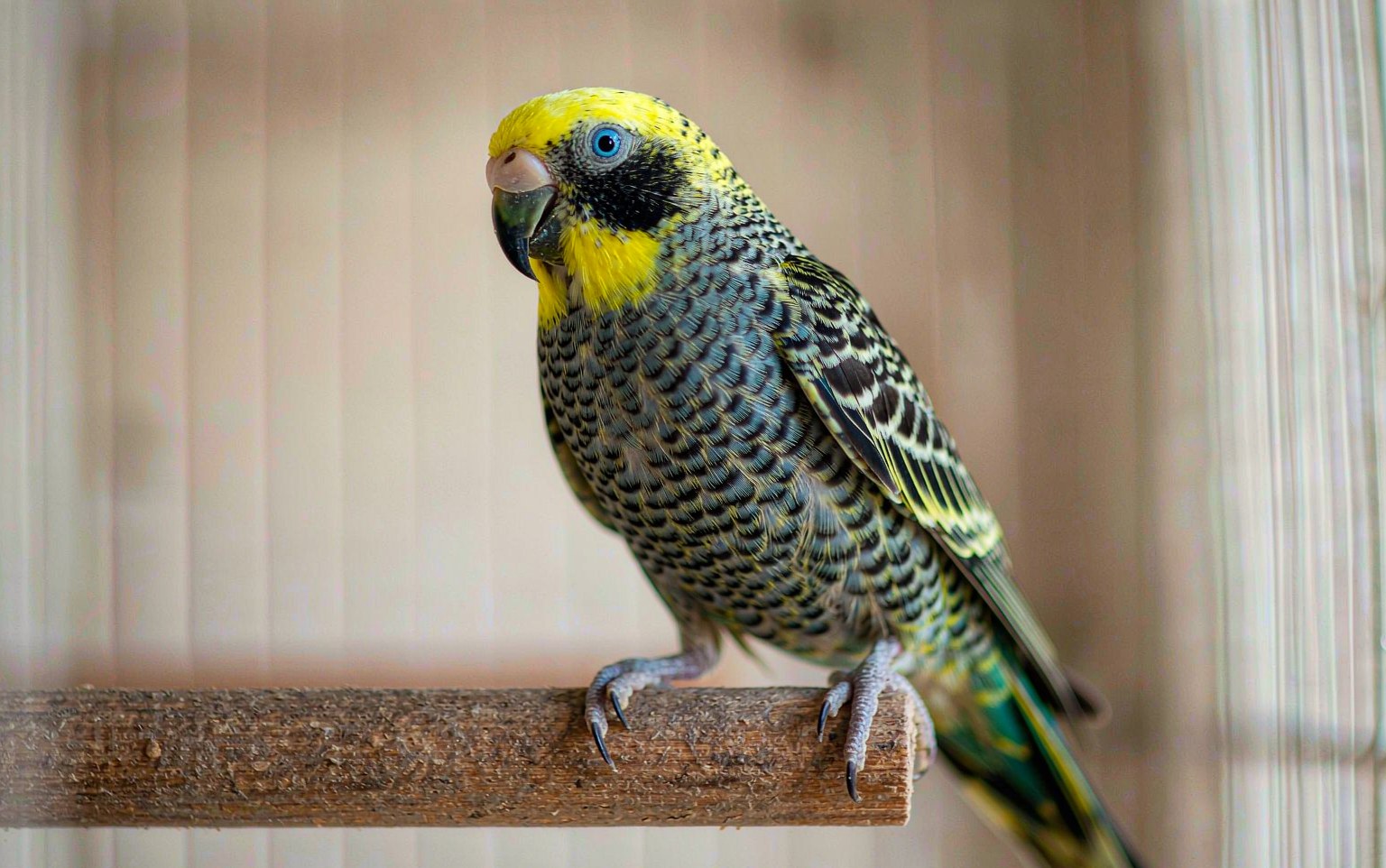
What Knemidokoptes Mites Actually Are
The mite behind scaly face is Knemidokoptes pilae, an almost invisible burrowing parasite. It only colonises bare skin: the cere and nostrils, the corners of the mouth, the beak, the legs and feet, and in heavy cases the vent and the preen gland. Budgerigars are the species most often affected; cockatiels, lovebirds and canaries can also develop it. In canaries and finches the same mite produces crusted, tassel-like growths on the toes, which is where the name “tassel foot” comes from.
Spread is mainly bird to bird through close contact, but mites also ride on shared objects — a wooden perch, a food dish, a travel carrier used for two birds months apart. Not every exposed bird develops lesions, so a positive test in one bird does not guarantee the cage mate will show signs.
The Signs to Look For
| Where | What you see |
|---|---|
| Cere and beak | White to brown honeycomb crusts; in long-standing cases the upper beak overgrows and curves |
| Mouth corners and around the eyes | Chalky crust spreading outward; the bird rubs its face on perches and dishes |
| Legs and feet | Thickened, flaky scale; advanced cases form crusted tassels, mostly in canaries and finches |
| Vent and preen gland | Crusted skin in heavy infestations, often missed under the tail feathers |
Early lesions are easy to overlook on a busy bird. Photograph your bird’s face and feet in daylight every few months; a change that is invisible day to day becomes obvious side by side.
Why the Crust Is Not Always Mites
Honeycomb texture is the giveaway, and most vets recognise it on sight. A skin scraping viewed under a microscope confirms it, though with budgies the clinical picture alone is usually enough. Two look-alikes are worth knowing. Psittacine beak and feather disease also distorts a beak, but it comes with abnormal, brittle feathers and rarely causes crusted skin. And a hen’s cere can thicken and darken to brown without any parasite at all — that change is hormonal, smoother, and stays confined to the cere.
Treatment and Breaking the Reinfection Cycle
Prescription antiparasitics such as ivermectin or moxidectin, given as two or three doses about two weeks apart, are the standard treatment and are generally curative. The work you do at home decides whether it comes back.
- See an avian vet rather than guessing. Dose and interval depend on the species and the bird’s weight.
- Finish every dose. Stopping after the crust falls off leaves the next mite generation alive.
- Soften, never pick. A vet may suggest a little paraffin oil to soften scale, but pulling crusts off brings bleeding and permanent scarring.
- Disinfect the whole setup. Scrub the cage, bowls, toys and perches with soap and hot water; replace porous wooden perches and nest boxes, which cannot be cleaned properly.
- Skip the cage mite strips. These devices are ineffective against burrowing mites and contain a chemical linked to cancer in humans.
Follow up with your vet about two weeks after the last dose so the beak and feet can be rechecked, especially if the beak had already started to overgrow. If you spot a honeycomb crust on your bird, treat it as an appointment to book this week — not a cosmetic problem to monitor.