When the evening chill sets in, hamster owners face a small animal with a big vulnerability. Hamsters are sensitive to cold: below about fifteen degrees Celsius they struggle, and lower still they can slip into torpor, a hibernation-like state that is dangerous for pet hamsters and can be mistaken for death. The good news is that winter hamster care needs no expensive gadgets, just a warm room, deep bedding, and a few careful habits.
Know the Temperature Thresholds
Aim to keep the room between 20 and 26 degrees Celsius. Around 15 degrees hamsters become sluggish and uncomfortable, and below roughly 10 degrees they risk entering torpor, where body temperature and breathing drop dramatically. Because small bodies lose heat fast and nighttime temperatures fall furthest, the quiet hours are when trouble happens. A cheap thermometer placed near the cage tells you more than any guess, so check it morning and evening through the cold months.
Place the Cage Where the Warm Air Lives
Location does most of the winter work. Move the enclosure away from drafty windows, exterior doors, and cold exterior walls, and never leave it on the floor, where the coldest air settles; a table or desk at least half a meter up is far safer. Keep it out of direct sun and away from radiators or heater vents, since hamsters need a stable temperature more than a hot one. If the whole room runs cold at night, warm the room itself with a radiator or heater, rather than aiming any device at the cage.
Deep Bedding Is the Real Insulation
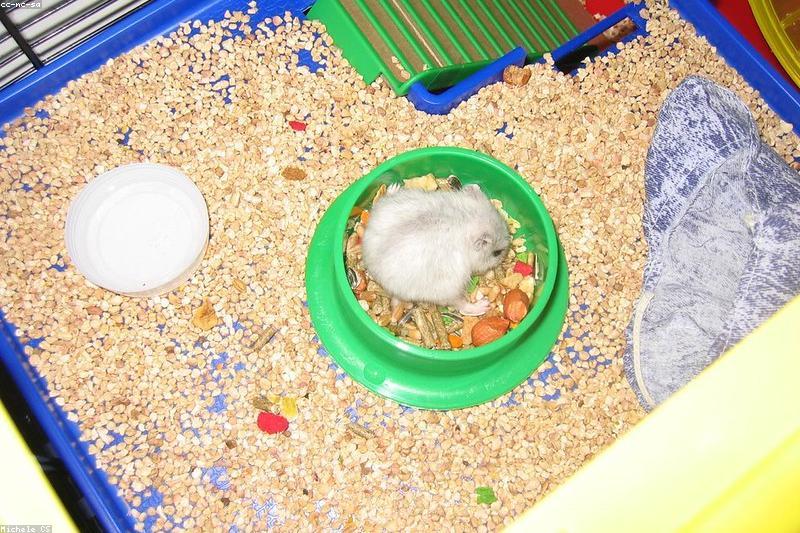
In the wild, hamsters escape the cold by burrowing underground, and deep bedding lets them do the same at home. Through the cold season:
- Increase bedding depth well beyond the summer layer; fifteen centimeters or more lets the hamster bury itself completely.
- Stick to safe materials: paper-based bedding or aspen shavings, never pine or cedar.
- Offer extra nesting material such as unscented toilet paper, which the hamster shreds into an insulating nest.
- Choose an enclosed wooden or ceramic hideout, which holds warmth better than plastic.
Heating Products to Avoid
| Product | Why it is risky |
|---|---|
| Cotton or fluffy nesting wool | Fibers wrap around limbs and can cause fatal blockages if swallowed |
| Heat mats under the cage | Cannot escape the heat; burns and overheating |
| Heat lamps | Disrupt the day-night cycle and stress the eyes |
| Hot water bottles inside the cage | Chewed plastic, scalds, and leaks |
A warm water bottle wrapped in towels against the outside of the cage is acceptable as a short-term emergency measure only, with the hamster able to move away from it.
If You Find a Cold, Stiff Hamster
A hamster in torpor feels cold, barely breathes, and may look lifeless. Do not apply direct high heat, and never use a hair dryer up close, because warming too fast can be fatal. Warm it slowly: hold it against your own body heat, or rest it on towels wrapped around a mildly warm bottle, and gently rub the body. Recovery can take an hour or more, and once it is moving, keep the room warm to prevent a relapse, then contact an exotic vet.
The Takeaway
Winter warmth for a hamster is a room problem, not a gadget problem: a stable 20-plus-degree room, a cage placed high and draft-free, deep bedding with extra nesting material, and a thermometer to prove it. Add a slightly richer diet to fuel the extra effort of staying warm, and your hamster will sleep through winter exactly as nature intended, in a warm nest it built itself.