New kitten owners are consistently shocked by one fact: the tiny creature that slept twenty hours a day has chosen the hours between midnight and dawn as its personal party time. Kittens do sleep sixteen to twenty hours daily — they simply do not care that your night is one of them. A sleep plan fixes most of it within two weeks, and it starts with deciding where the kitten sleeps.
The Bedroom Question
Decide on night one, and stay consistent, because kittens learn patterns fast. Many families start the kitten in a small, kitten-proofed room of its own — a bedroom or bathroom with the bed, litter box, water and a few toys — and open the whole flat gradually. Others want the kitten in the bedroom from the start, which is fine too, provided the room is safe for a sleep-walking kitten and you can ignore the three a.m. paw on your face. Whichever you choose, the answer must survive night three, or the kitten learns that crying relocates furniture and humans.
Build a Sleep Station Worth Choosing
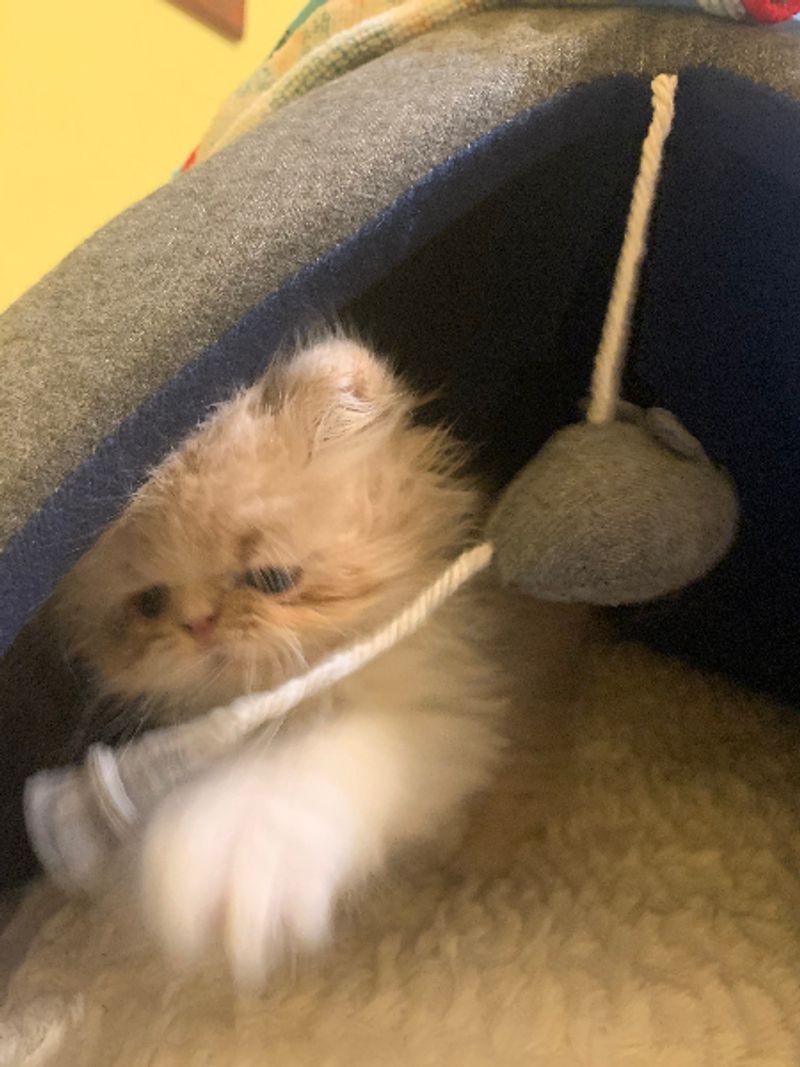
A kitten picks its bed by warmth, enclosure and smell. Offer a cozy enclosed bed — a covered cat bed, a cardboard box lined with a fleece that smells like the litter it came from — placed away from drafts, loud appliances and the household’s night traffic. Keep the litter box reachable at night, but not beside the food and water; no cat wants a toilet next to the kitchen. A little of your scent on the bedding, or a ticking-style plush toy for very young kittens, makes the first nights alone dramatically easier.
The Evening Routine That Ends the Party
The trick to a kitten that sleeps through is spending its energy before your bedtime, in the order its instincts expect:
- Hunt: a real play session in the evening, wand toy moving like prey, until the kitten is genuinely tired — ten to fifteen minutes is enough
- Catch: let the kitten win, every session; a hunt that never pays off leaves frustration in the tank
- Eat: the last meal of the day right after play, mimicking the natural catch-then-eat sequence
- Sleep: lights low, same spot, every night — the full cycle ends in a groom and a crash
Then comes the harder half: when the kitten paws your face at three in the morning, do not get up, do not feed, do not play. Every response teaches that dawn is negotiable. Wait it out, and feed breakfast only after you are genuinely up. Within a week or two, most kittens accept the new timetable completely.
Night Safety for a Sleepwalking Kitten
Kittens patrol at night whether you see them or not, so the flat must be safe unattended: close doors to rooms with hazards, put away string, hair ties and small objects that are midnight snacks in a kitten’s eyes, and check that windows have secure screens. Never punish the midnight zoomies — the running is healthy development, and the goal is a schedule shift, not a quieter kitten. If the calling and pacing persist well past the adjustment weeks with no improvement, mention it at the next vet visit; occasionally a restless night has a cause worth checking rather than a habit worth training.
The takeaway. Pick the sleeping arrangement on night one, build a warm enclosed bed, run the hunt-catch-eat-sleep cycle every evening, and starve the three a.m. party of any audience. Do that consistently and the same kitten that owned your nights this month will be asleep on your feet by ten o’clock for the next fifteen years.