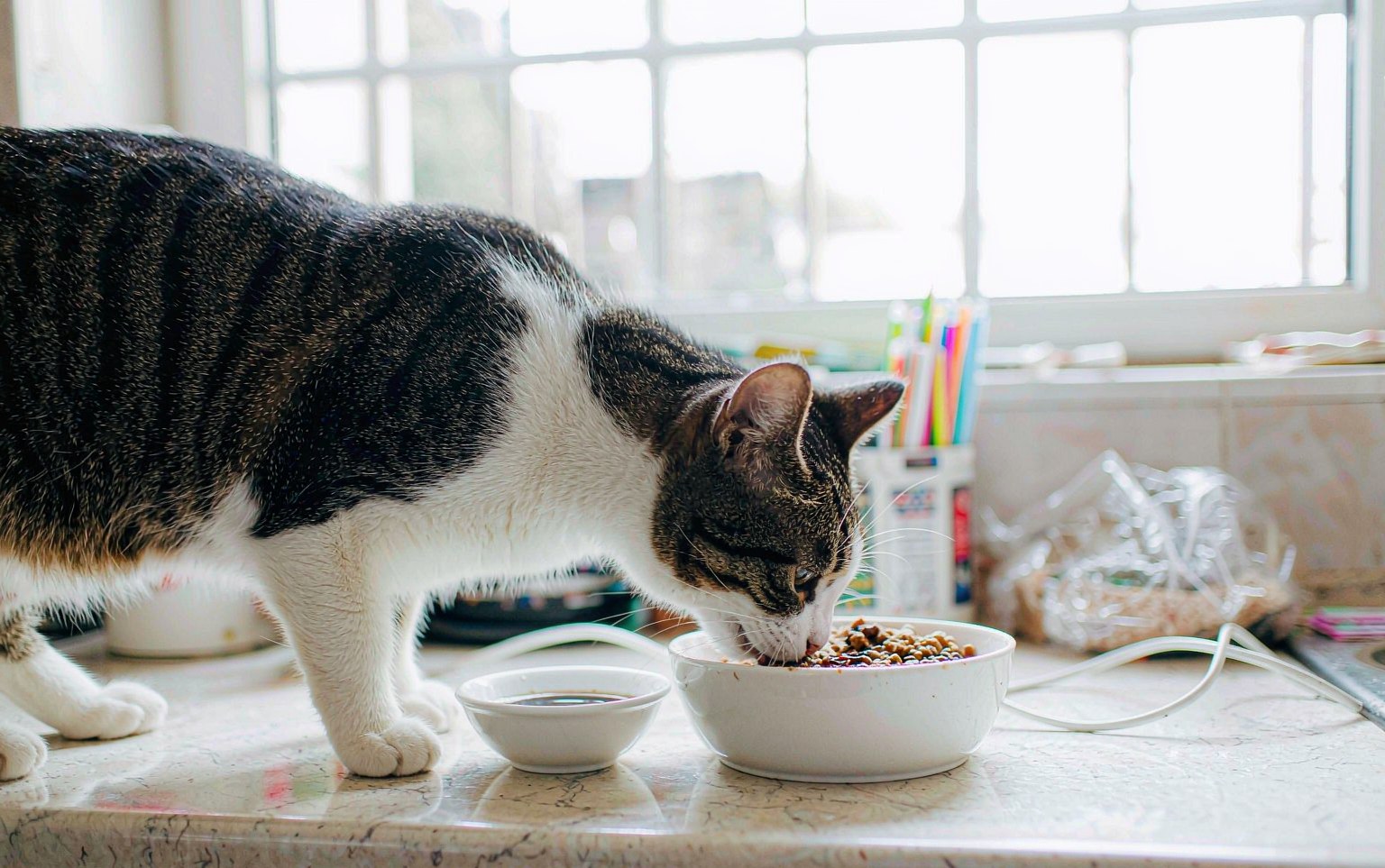
Walk down any pet food aisle and you will see two very different formats: crunchy dry kibble and soft canned food. Many owners end up asking whether they can use both at once. The answer is yes. Mixing dry and wet food, sometimes called mixed feeding, is a perfectly sound way to feed a cat or dog. The catch is that the two formats are not interchangeable in volume, so the combination has to be planned rather than eyeballed.
Why Mix at All?
Each format brings something the other lacks. Wet food is roughly 75 to 80 percent water, which quietly boosts daily hydration, a real benefit for cats, whose natural thirst drive is weak, and for older pets in general. Its aroma also makes it far more tempting, which helps with fussy eaters. Dry kibble, on the other hand, is energy dense, easy to store, simple to portion, and its crunchy texture gives some abrasive chewing action. Combining the two lets a pet enjoy the strengths of both at a lower cost than feeding wet food exclusively.
The Calorie Math: Volume Lies
The most common mistake in mixed feeding is treating a scoop and a can as equal portions. They are not even close.
| Format | Typical moisture | Typical energy density |
|---|---|---|
| Dry kibble | About 10 percent | Roughly 3.5 to 4 kcal per gram |
| Wet canned food | About 75 to 80 percent | Roughly 0.9 to 1.2 kcal per gram |
In practice, 100 grams of kibble carries roughly three to four times the calories of 100 grams of wet food. Adding a full can on top of a full daily ration of kibble can push a pet well past its maintenance calories, and the weight gain follows within months. The fix is simple: read the calorie statement on both labels, decide what share of the daily calories comes from each format, and convert those shares into grams. A 50/50 calorie split or a 75/25 kibble dominant split both work well.
Four Practical Ways to Combine Them
- Same bowl mix: stir a weighed portion of wet food through kibble so the aroma coats every piece. A favourite with picky eaters.
- Two bowls, one mealtime: offer wet food in one dish and kibble in another at the same sitting.
- Alternating meals: kibble at breakfast, wet food at dinner. The easiest to portion, and wet food never sits out long.
- Wet topper: a small weighed spoonful of wet food over kibble purely for flavour, kept inside the day’s calorie budget.
Safety Rules for Mixed Meals
- Once wet food is mixed in or served, pick the bowl up after about 30 minutes; moist food spoils fast at room temperature.
- Wash the bowl after every wet meal rather than just topping it up.
- Introduce the new format gradually over about a week so the gut has time to adjust.
- Keep the total daily calories constant. The mix changes the format, not the budget.
- If your pet eats a therapeutic diet chosen by your veterinarian, ask before mixing anything into it.
Mixed feeding is one of the easiest upgrades to a feeding routine: more moisture, more aroma, and a pet that actually looks forward to dinner. Weigh both components, hold the daily total steady, and the best of both formats ends up in one bowl.