Automatic feeders have gone from a niche gadget to a normal piece of feeding equipment. Programmed well, one can deliver breakfast at the same minute every morning, split the day into measured portions, and keep a routine intact when the household schedule is chaotic. Programmed carelessly, it can silently overfeed a pet for months or skip meals entirely. The difference lies almost entirely in the setup, not the device.
Where a Feeder Actually Helps
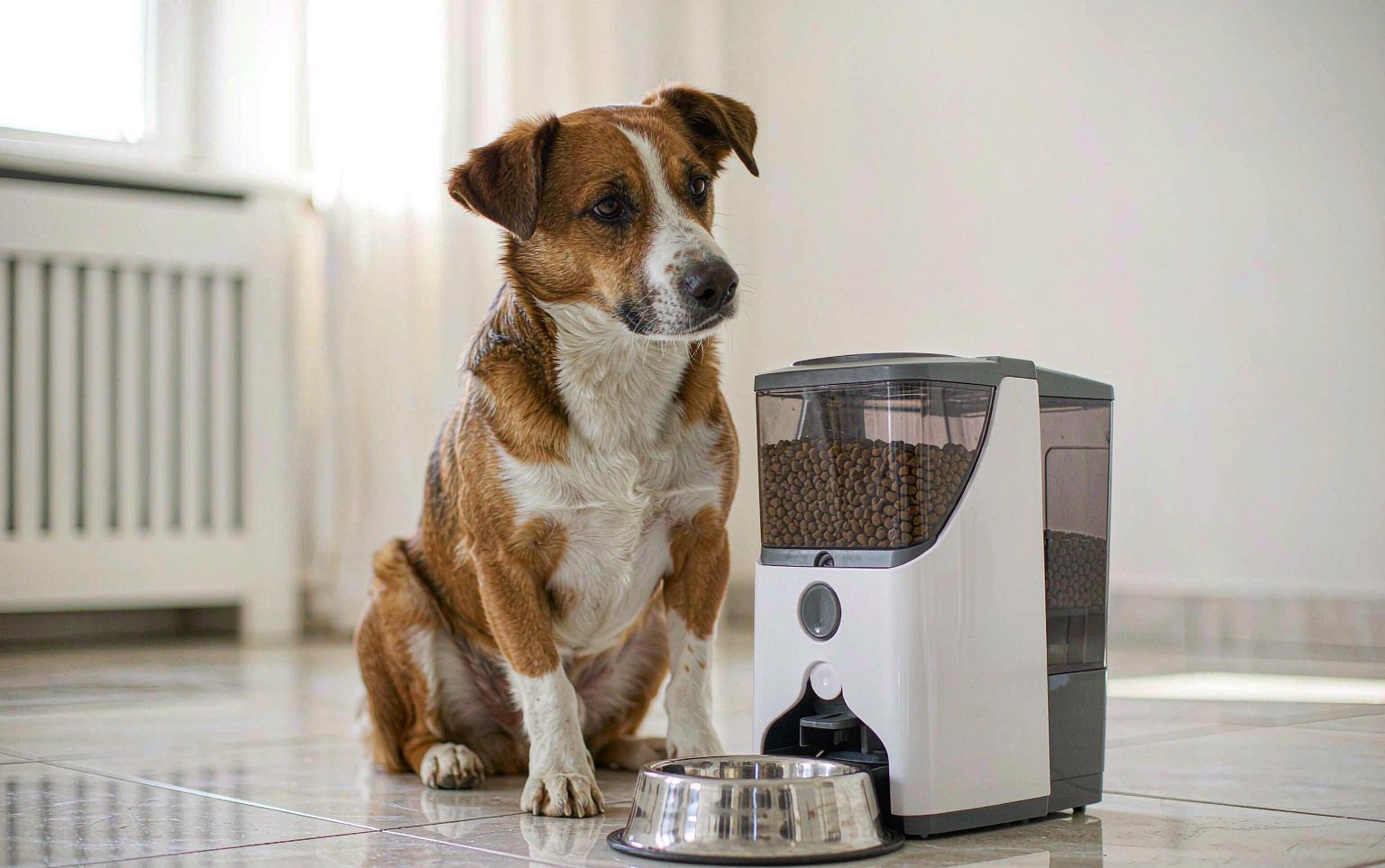
A timed dispenser shines for healthy adult cats and dogs eating dry food on a fixed schedule. It removes human error from portioning, delivers small frequent meals that suit feline grazing habits, and keeps meal times predictable, something many pets find genuinely reassuring. It also works as a useful partner to a pet sitter for short absences: the machine handles the timing while the sitter handles everything else, from water to play to the daily visual check.
Test Before You Trust It
- Run at least ten test dispenses into a bowl using the exact kibble your pet eats.
- Weigh each portion in grams on a kitchen scale and write the results down.
- Compare the average against your target grams. If the variance is large, correct the setting, or portion by weight instead of cup settings.
- Repeat the check every month. Mechanisms wear, and kibble shape, size and oiliness all change how food flows through the chute.
Independent testing has repeatedly found that many models dispense slightly more than programmed. A few extra kibbles per meal sounds trivial, but over a year it can quietly undo a weight management plan.
The Failure Modes to Plan For
- Power and batteries: low batteries can skip meals or shrink portions. Know whether your model holds its schedule through an outage.
- Jams: large, irregular or oily kibble can bridge in the hopper. Smaller, rounder kibble usually flows better.
- Connectivity: an app or network outage may pause remote controls even when local schedules keep running.
- Tipping and chewing: place the unit on a stable surface and protect the power cord from enthusiastic mouths.
- Multi pet households: one open hopper invites the fastest pet to steal meals. Separate stations or supervised feeding solve this.
- Hygiene: empty and wash the hopper on a schedule instead of endlessly topping it up; stale crumbs and oil build up fast.
When a Feeder Is the Wrong Tool
A machine cannot tell you whether your pet actually ate, drank, or left food behind, and eating habits are one of the most useful daily signals an owner gets. Avoid sole reliance on a feeder for pets on veterinary therapeutic diets, pets whose appetite is being watched for health reasons, or any pet that needs wet food, which most dispensers cannot hold safely. And for any absence longer than a day or two, arrange a human check-in. A full hopper is not a care plan.
Used with a tested portion, a battery plan and a human backup, an automatic feeder is a reliable assistant that keeps routine steady. Used blindly, it is a black box. One afternoon of testing buys you the first kind.