Every cat owner eventually plays hide and seek with a pet who has wedged itself behind the sofa or inside a cardboard box and refuses to come out. Hiding is completely normal feline behavior – cats are both predator and prey by ancestry, and an enclosed space is how they feel in control. The skill worth learning is telling the difference between a cat who is enjoying a quiet spot and a cat who is telling you something is wrong.
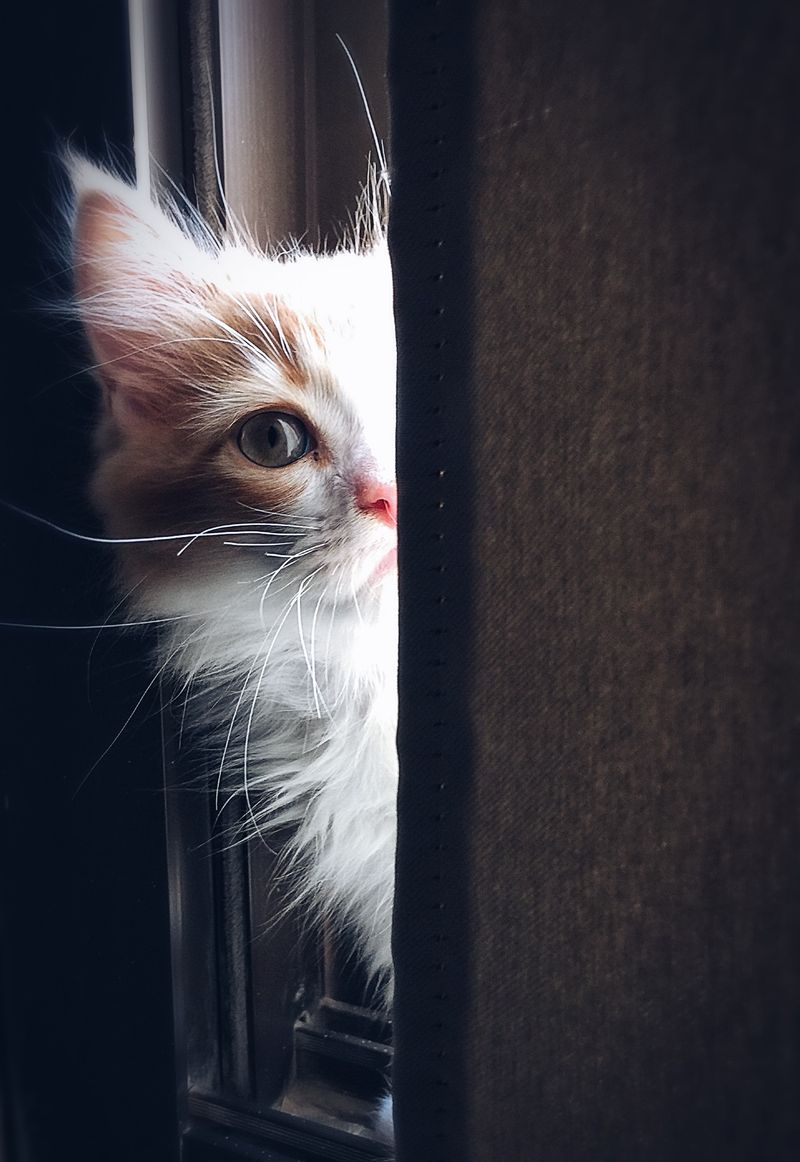
Why Hiding Is Part of Cat Design
Cats do not solve problems by arguing; they solve them by withdrawing. An enclosed space lowers their heart rate, blocks visual threats, and lets them watch the room without being watched. A cat napping in a box on an ordinary day is not anxious – it is comfortable. Hiding only becomes information when it changes: a social cat that suddenly vanishes, or a hiding duration that keeps growing.
Common Triggers for Extra Hiding
- New environments: a move, new furniture, or a rearranged room erases the familiar scent map a cat depends on.
- New people or pets: guests, a new baby, or a second cat can push a resident cat into seclusion.
- Loud events: fireworks, storms, renovations, or parties – noise phobias are real in cats.
- Multi-cat tension: a cat being bullied by a housemate will hide to avoid crossing paths.
- Feeling unwell: pain and illness make cats withdraw; hiding is one of the most common non-specific symptoms in feline medicine.
Normal Hiding vs Warning Signs
The pattern around the hiding matters more than the hiding itself:
| Sign | Normal | Worth a Vet Call |
|---|---|---|
| Eating and drinking | Normal appetite | Reduced or skipped meals |
| Litter box | Usual routine | Changes, straining, or accidents |
| Energy when out | Plays and greets as usual | Lethargic, withdrawn even when visible |
| Duration | Comes out to eat and interact | Hiding for days, or new and sudden |
| Other signs | None | Vomiting, limping, vocalizing in pain |
A cat that hides and stops eating is an urgent situation, because a cat that goes without food for just a few days risks hepatic lipidosis, a serious liver condition. When in doubt, a same-week vet visit is the safe call – cats mask illness, and by the time they look obviously sick they have usually been unwell for a while.
How to Help a Hiding Cat
Never drag a cat out of hiding; being pulled from a safe spot is exactly what teaches a cat that humans are a threat. Instead:
- Provide better hiding spots: a box, a covered bed on a shelf, or the carrier left out with soft bedding inside, so the cat chooses safe places rather than the gap behind the dryer.
- Let the cat come to you. Sit nearby, speak softly, and offer treats without demanding interaction.
- Reduce the pressure: give a new pet or guest time, add vertical space and extra resources in multi-cat homes, and use a pheromone diffuser during stressful periods.
- Keep routines stable: feeding and play at the same times rebuild the sense that the world is predictable.
The Bottom Line
Respect the hide, watch the appetite, and know your cat’s baseline. A cat that eats, drinks, and uses the box normally while enjoying its box is fine. A cat that hides and stops doing the things it loves is asking for help – and that is one invitation you should always accept.