Most raids on a bin are not greed. They are the natural behaviour of an animal that has learned food sometimes appears in a wrapper. The fix is less about discipline and more about making the container genuinely uninteresting, then giving your pet something better to do.
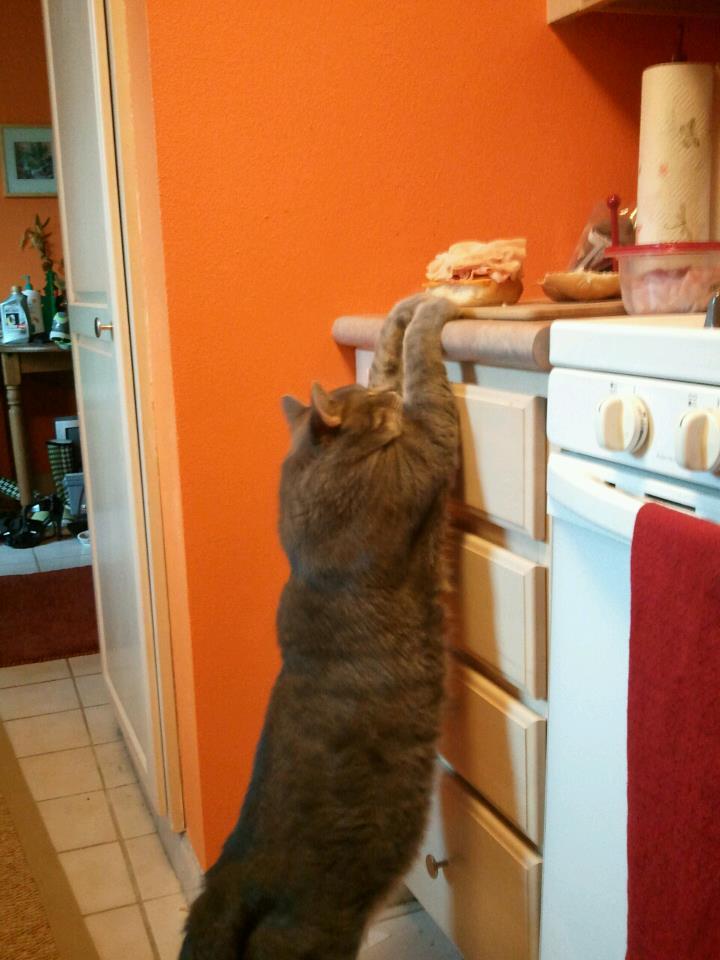
What Is Actually Worth Worrying About
The contents of a bin are a mixed bag of items that cause very different problems. Bones and fat trimmings are heavy and greasy. Mouldy food, coffee grounds and onion or garlic scraps are best kept away entirely. Cooked bones can splinter. Used medication patches still carry active drug. String, skewers and floss can cause linear injuries that are serious and often need surgery. Batteries and plastic wrap add their own risks.
One detail owners miss: a bag that smells empty to you still smells like a cooked meal to your pet. Juices, wrappers and packaging are the reward, so an emptied bag is not a safe bag.
Why Some Pets and Not Others
Scavenging is a normal survival behaviour, not a character flaw, and it shows up more in food-motivated individuals. Boredom raises the odds, and so does underfeeding relative to activity level. Cats often investigate meat packaging, string and floss rather than the whole bin. A change in routine can trigger a new phase of raiding too: a returned work schedule, a new pet, or a stretch of rainy days with less exercise all leave more unused energy pointed at the kitchen. If raiding has started suddenly in a pet that never bothered before, look at what changed in the household first. The key question is whether the behaviour only happens when nobody is home — if it does, the plan must work without supervision, because training alone will not.
A Bin-by-Bin Setup
| Bin | Typical contents | Pet-smart setup |
|---|---|---|
| Kitchen bin | Wrappers, bones, scraps | Foot-pedal bin with a locking lid, inside a closed cabinet; empty it nightly |
| Compost crock | Peels, grounds, mouldy food | Sealed gasket lid on the counter; a closed outdoor tumbler, never an open pile |
| Recycling | Cans, jars, plastic trays | Rinse before binning; use a lidded bin or a pull-out drawer |
| Bathroom bin | Floss, cotton, medication patches | Lidded bin inside a cabinet; fold patches into a sealed bag first |
| Bedroom and office | Gum, batteries, hair ties | Closed drawers, and a battery box out of reach |
Backing the Setup With Training and Enrichment
- Teach leave it and drop it as games, then reward generously for both.
- Feed a meal before you leave the house, so a raid is not driven by hunger.
- Offer puzzle feeders, a chew in a holder, or scattered kibble to occupy the same energy.
- Close the kitchen door or fit a pet gate across the doorway while you are out.
- Make the container itself boring: use a bungee, a weighted lid or a child-lock pull-out.
- Clean up immediately after cooking, and never leave a bin bag on the floor overnight, even briefly.
Punishment after the fact teaches nothing, because a pet cannot connect a scolding with a raid that finished an hour earlier. Prevention plus enrichment is what actually changes the behaviour.
Know when a raid becomes an emergency. Repeated retching without bringing anything up, a hard or swollen abdomen, drooling, restlessness, pacing or a sudden refusal to eat all point to a possible obstruction and need prompt veterinary attention. Do not induce vomiting unless a professional instructs you to, keep the packaging or any remaining item, and describe what was missing and when. Most bin-related trouble never gets that far — a locking lid and a full meal are usually enough to end the habit before it starts.