Suppose you are choosing between a canned food that guarantees 8% protein and a dry kibble that guarantees 25%. The kibble looks far richer, so the choice seems obvious. It is not, because those two numbers describe different things. The guaranteed analysis on every pet food label is expressed on an “as-fed” basis, which includes the water in the product. Once you understand this, a simple two-step conversion called the dry matter basis lets you compare any two foods fairly.
Why Label Numbers Mislead Across Formats
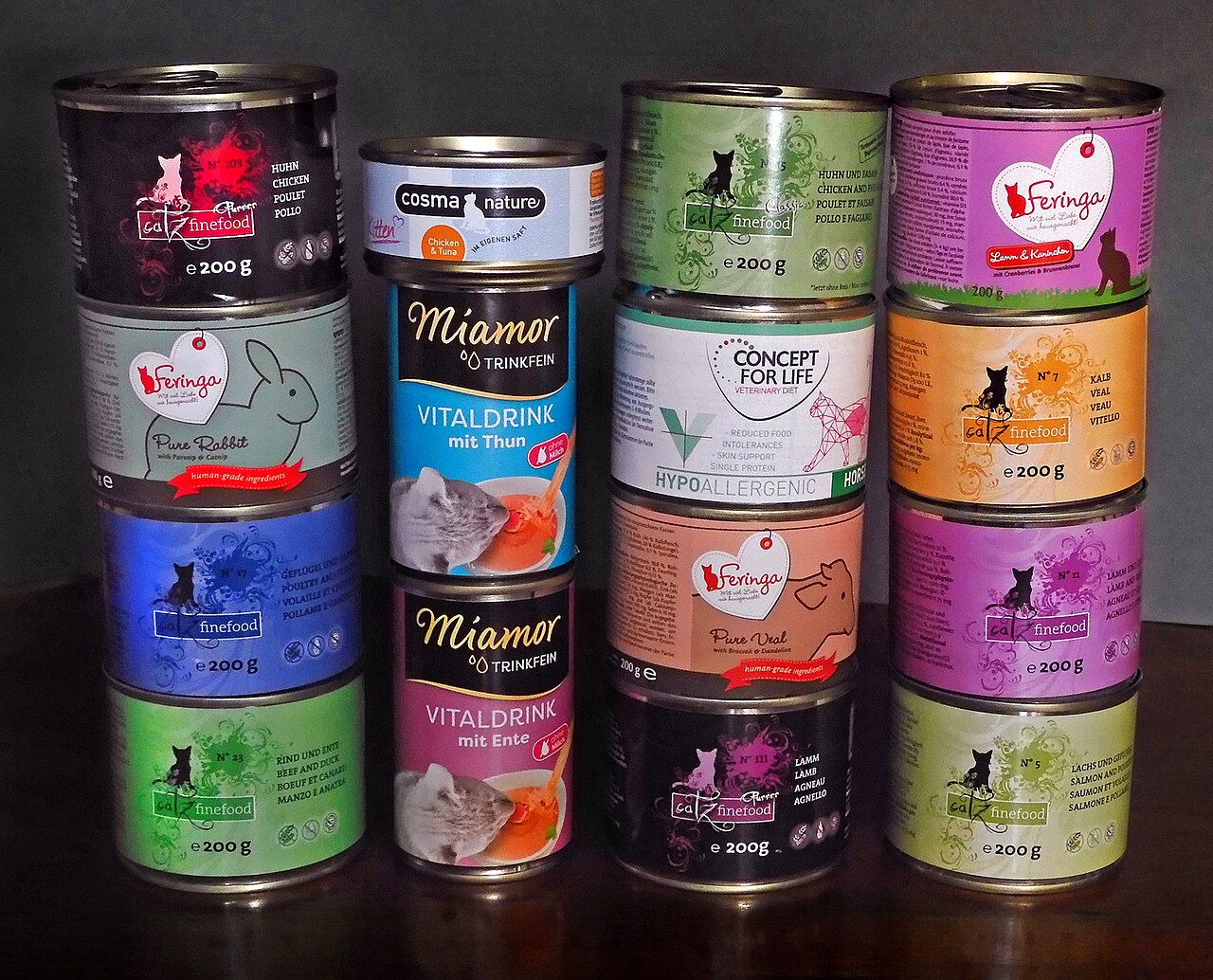
Moisture content varies enormously between food types. The FDA notes that canned pet food typically contains 75 to 78% water, while dry food runs about 10 to 12%. Most of the difference between “8% protein” and “25% protein” is simply water. Comparing the two percentages directly is like comparing the strength of two drinks served in different sizes of glass. This matters most when switching between wet and dry formats, but even two canned foods can differ enough in moisture to skew a comparison.
The Two-Step Conversion
The method, described in the FDA’s consumer guidance and the MSD Veterinary Manual, takes only two steps:
- Subtract the guaranteed moisture percentage from 100 to get the dry matter percentage of the food.
- Divide the nutrient percentage by the dry matter percentage, then multiply by 100.
Using the MSD Veterinary Manual’s worked example: Diet A is a dry food with 24% protein and 12% moisture, so its dry matter is 88%, and its protein on a dry matter basis is 24 ÷ 88 × 100, or about 27.3%. Diet B is a canned food with 8% protein and 82% moisture, giving 18% dry matter and 8 ÷ 18 × 100, or about 44.4% protein. The “weaker” canned food is actually much more protein-dense once the water is removed.
| Guaranteed analysis | Diet A (dry) | Diet B (canned) |
|---|---|---|
| Protein (as fed) | 24% | 8% |
| Moisture (max) | 12% | 82% |
| Dry matter (100 − moisture) | 88% | 18% |
| Protein, dry matter basis | 27.3% | 44.4% |
What Else You Can Convert
The same math works for fat and fiber, which are the other values the guaranteed analysis always lists. Converting them is especially useful when comparing a light or senior formula against a standard one, because as-fed numbers can hide real differences in nutrient density. Keep two cautions in mind. First, guaranteed analysis values are minimums or maximums, not exact averages, so small differences between foods may not be meaningful. Second, when two foods differ mainly in calorie concentration, comparing calories per cup or per can is often more practical than comparing nutrient percentages, especially for weight management.
A Practical Shortcut
- For quick mental math, remember that typical dry food contains roughly four times the dry matter of typical canned food, so multiplying a canned food’s values by four gives a rough comparison.
- Only compare foods directly when their moisture guarantees are similar.
- Write down moisture, protein, and fat for each candidate food before you shop, then convert at home.
- Use the converted numbers together with the nutritional adequacy statement, which tells you whether the food is complete for your pet’s life stage.
The bottom line: dry matter basis does not tell you which food is healthier, but it removes the water distortion so that you compare nutrient density honestly. Two minutes of arithmetic puts a canned food and a kibble on the same footing, and that makes every other part of choosing a diet easier.
Photo: Jonn Leffmann / CC BY 3.0 / Wikimedia Commons