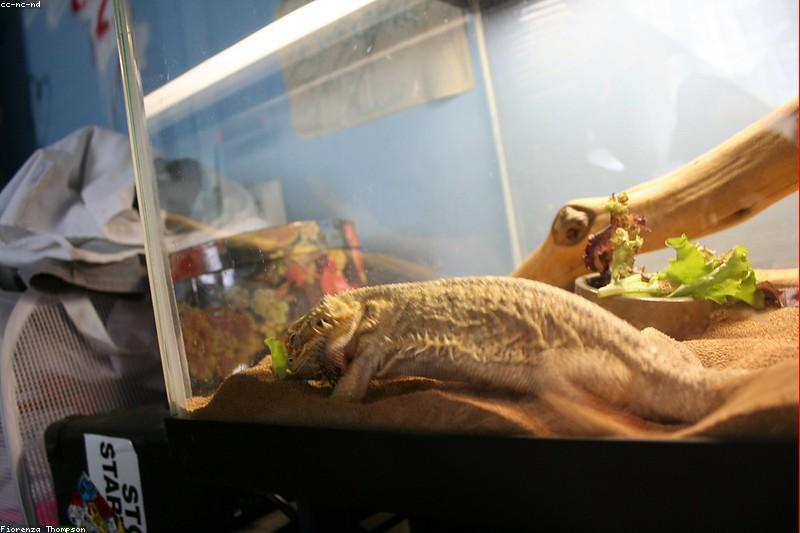
Adult bearded dragons get roughly 70 to 80 percent of their diet from plants, which means the salad bowl is where their long-term bone health is actually decided. Yet most failing salads fail for the same two reasons: too much watery filler, and no attention to the calcium-to-phosphorus ratio that governs whether your dragon can absorb calcium at all.
Why the Ca:P Ratio Runs the Show
Phosphorus competes with calcium for absorption in the gut. If a vegetable carries more phosphorus than calcium, your dragon loses calcium while eating it. The working target for the whole diet is a calcium-to-phosphorus ratio of about 2:1 or better. That single rule explains why collard greens are a superstar, why spinach is a trap, and why iceberg lettuce delivers nothing but water.
The 80/15/5 Salad Formula
A practical, widely used split for each bowl – or across a week of bowls – looks like this:
- 80 percent staple greens: high-calcium leaves such as collard, mustard, turnip, and dandelion greens, plus endive or escarole for variety.
- 15 percent secondary vegetables: shredded carrot, butternut or acorn squash, zucchini, and bell pepper for color, texture, and vitamin A.
- 5 percent fruit, at most: a blueberry or two as an occasional treat, not a daily ingredient. Fruit is sugar with a weak mineral profile.
Rotate three or four staple greens rather than repeating one forever. Rotation keeps individual compounds – like goitrogens in some cruciferous leaves – from building up through constant exposure, and it keeps a food-motivated dragon interested.
Staple Greens, Ranked
| Green | Ca:P Ratio | How Often |
|---|---|---|
| Collard greens | About 14.5:1 | Daily staple |
| Mustard greens | About 9:1 | Daily rotation |
| Turnip greens | About 4.5:1 | Daily rotation |
| Dandelion greens | About 2.8:1 | Daily rotation, pesticide-free only |
| Endive / escarole | About 1.9:1 | Weekly variety |
What Stays Off the Menu
A short blacklist prevents the most common mistakes:
- Iceberg lettuce – nutritionally empty, mostly water.
- Spinach as a staple – its oxalates bind calcium; at most a rare garnish.
- Avocado – toxic to reptiles.
- Onion and garlic – not part of a bearded dragon diet.
- Any produce from treated lawns or with pesticide residue – wash everything, and never forage from sprayed areas.
Preparation Tips That Actually Help
Serve salad raw and in the morning, so digestion happens during the warmest hours when your dragon’s gut is working. Chop everything to pieces smaller than the gap between the eyes – the standard safe-size rule borrowed from insect feeding. Misting the greens lightly adds water intake for dragons that ignore their bowl, and remove uneaten salad after a few hours before it wilts into the substrate.
The Bottom Line
Think of the salad bowl as a daily calcium supplement your dragon actually wants to eat. Build it from rotated high-calcium greens, keep fruit as a rare guest, and the 80/15/5 habit will quietly do more for your bearded dragon’s skeleton than any powder dusted onto a cricket.