An unopened can of wet cat or dog food is shelf-stable for years because it was sealed and sterilized. The moment the ring comes off, that protection ends and the food behaves exactly like leftover soup in your own kitchen: bacteria get in, fats start to oxidize, and the clock starts running.
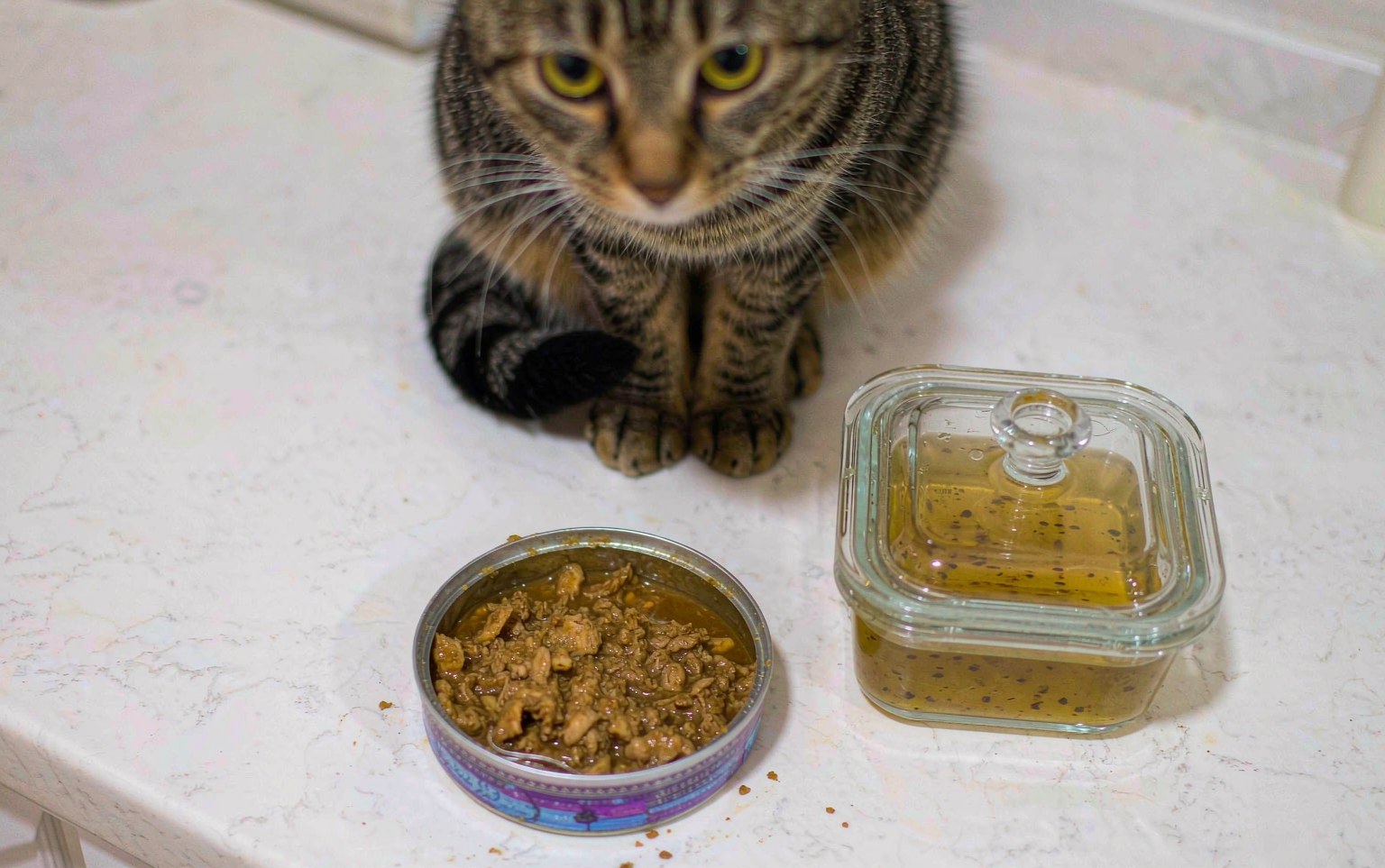
The two-hour and three-to-five-day rules
Wet food should not sit out at room temperature for more than two hours, or one hour on a warm day. Whatever your pet has not eaten by then goes in the bin, not back into the can. Refrigerated, opened wet food stays safe and palatable for about three to five days; many manufacturers print a shorter window on the label, and the shorter one wins. Keep the fridge at 4°C (40°F) or below, and store containers on a shelf rather than in the door, where the temperature swings with every opening. The range is a guideline, not a guarantee: a fridge running warm shortens it, and recipes with fewer preservatives fade fastest.
Lid, foil, or container?
The original can plus a snap-on silicone lid is convenient, but transferring leftovers is better. A sealed glass or BPA-free plastic container keeps air out properly, prevents a metallic taste from developing at the cut edge, and stops the fridge from smelling of pet food. Plastic wrap and foil are the weakest options because neither makes an airtight seal. Two habits make the whole system work:
- Write the opening date on masking tape on the lid; memory is unreliable by day three
- Use a clean spoon for every serving; saliva from a licked spoon starts spoiling the whole batch
- For small pets, divide a large can into single-meal portions the moment it is opened
- Wash containers between batches, not only when they look dirty
Freezing the surplus
Portions freeze well for one to two months. Spoon single meals into small containers or ice-cube trays, freeze, then thaw overnight in the refrigerator, never on the counter. Label frozen portions with the date and the flavor, because frozen pate all looks the same. Expect texture changes after thawing; a firm pate may turn slightly grainy, and some picky eaters notice. Warm refrigerated food by stirring in a little warm water rather than microwaving, which can create hot spots.
Serving from the fridge
Cold fat congeals and smells weaker, and some pets refuse a meal straight from the refrigerator. Let a portion sit for a few minutes and stir in warm water to bring back the aroma; stirring also redistributes the jelly and fat that separate during storage.
When to throw it out early
- A sour, rancid, or simply off smell; trust your nose over the calendar
- Any visible mold, discoloration, or gray tones
- Texture that has turned slimy, watery, or separated
- Your pet sniffs and walks away, which is often the first alarm
Saying it still smells fine is not a safety test; bacteria do not announce themselves. Buy can sizes that match your pet, date every container, and the five-day rule becomes easy to live with.